The Hidden Shift Powering America's Holiday Shopping
Every festive season in the United States reinforces a simple economic truth: strong consumer spending is only possible with a robust supply chain. It is the invisible force ensuring shelves are stocked, deliveries are swift, and online orders are confirmed in an instant. However, a fundamental transformation is now underway behind the scenes. American retailers and brands are actively moving away from long and vulnerable global supply routes. Instead, they are embracing reshoring and nearshoring, bringing production closer to home.
This strategic pivot is creating a new wave of winners across American manufacturing, logistics, and supply-chain technology. As US consumers prepare for another season of strong spending, the businesses located nearest to them are the ones poised to gain the most ground.
From Strategy to Necessity: The Urgency of Reshoring
The past three years have exposed the profound vulnerabilities of global supply chains. While the extreme disruptions of 2021-22 have eased, significant risks persist. For instance, shipping costs remain elevated compared to pre-pandemic levels. In late 2024, global container rates surged again due to rerouting around the Red Sea conflict, with average rates sitting at almost 2–2.5 times higher (291%) than 2019 norms.

Transit times from Asia to the US remain inconsistent. A typical voyage from Shanghai to Los Angeles can still take anywhere between 15 to 30 days, subject to rerouting and port congestion. Meanwhile, US consumer demand has proven more resilient than anticipated. Holiday spending for 2025 is projected to grow by a steady 3.7–4.2%, buoyed by cooling inflation and a strong job market. Inflation in 2025 has hovered around 3%, while unemployment has stayed near 4.3%, supporting household purchasing power.
This leaves retailers with a critical equation: Strong demand plus unpredictable global shipping equals unacceptable inventory risk. No company wants to lose a sale because its products are stuck on a ship. Consequently, businesses are shifting key production stages closer to home, not just for resilience, but for sheer speed.
The Rise of America's 'New Industrials'
Reshoring is no longer a mere defensive tactic; it is evolving into one of the most significant structural shifts in the US economy. Industry reports indicate that over 500,000 manufacturing jobs have been announced in the past two years through reshoring and foreign direct investment. This activity is concentrated in key sectors, including:
- Consumer electronics and EV batteries
- Semiconductors and Solar equipment
- Chemicals and Medical Equipment
- Apparel, Textiles, and Furniture
- Machinery and Processed foods
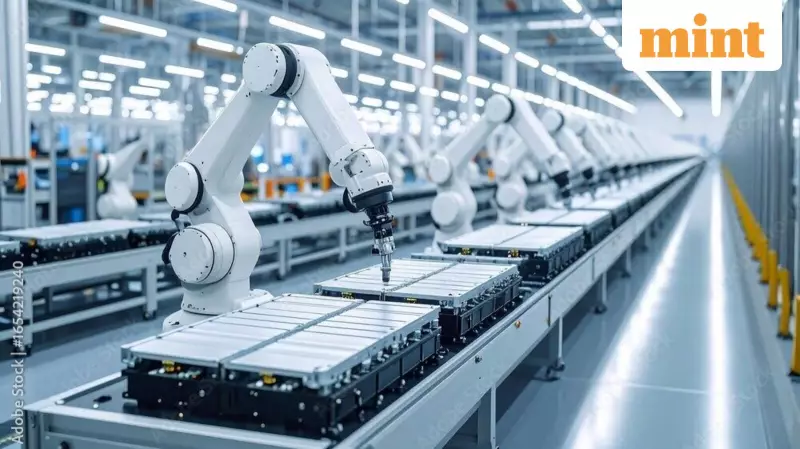
While not all production is returning, critical functions like final assembly, short-run manufacturing, testing, packaging, and rapid replenishment are increasingly being established on US soil. This fuels the emergence of the 'New Industrials'—modern, tech-driven ecosystems that integrate domestic manufacturing, logistics, automation, and AI-driven fulfilment into a fast, flexible distribution network.
Identifying the Winners in the Reshoring Wave
Within this broad trend, several types of companies are standing out and gaining a competitive edge.
1. Domestic Manufacturing Hubs
Brands that produce quick-turnaround goods, such as apparel basics, home essentials, and small appliances, are benefiting immensely from short-cycle manufacturing. States like Texas, Arizona, Georgia, and Ohio have become major hubs. Companies are setting up smaller, automated facilities that can swiftly adjust production and replenish shelves during peak shopping seasons.
2. Logistics and Distribution Networks
The entire domestic logistics network is gaining strategic importance. From trucking and rail operators to last-mile delivery services and warehouse providers, these players are essential for moving goods faster than ever. Key warehousing markets like Dallas–Fort Worth, Atlanta, and the Inland Empire are experiencing strong utilisation as retailers expand their fast-response fulfilment centres.

3. Supply-Chain Technology & Automation
Investments in automation have surged since 2020. There is sharp growth in funding for robotics, AI-driven forecasting, and warehouse automation. Retailers are leveraging these technologies to build more responsive, local-first supply chains that can predict and meet consumer demand with greater accuracy.
What This Means for Indian Investors
For Indian investors, the most compelling opportunities lie not just in iconic US consumer brands, but in the infrastructure that supports them. This trend is particularly relevant for three key reasons.
First, it is consumer-driven, not just policy-driven. This shift is powered by durable consumer demand and changing retailer behaviour, making it a structural, long-term trend rather than a temporary stimulus story.
Second, it significantly expands the investment universe. Beyond well-known retail names, the key beneficiaries include:
- Domestic manufacturing firms
- Logistics and warehouse companies
- Supply-chain automation and robotics specialists
These sectors offer stable, structural growth potential. Finally, investing in US supply-chain momentum provides excellent global diversification for Indian portfolios, as the Indian and US economies often move through different cycles.
The entire ecosystem reflects a broader shift: the strength of US retail now depends more on speed than distance. This is reshaping the American retail backbone into a faster, more resilient, and consumer-driven system. For the savvy investor, the momentum behind the consumer is where the real opportunity lies.