In a significant development, United States national security officials have concluded that Ukraine did not attempt to assassinate Russian President Vladimir Putin or strike his residences, directly countering allegations made by Moscow. This assessment, reported by The Wall Street Journal, is based on a Central Intelligence Agency (CIA) evaluation which found no proof of any such attack targeting the Russian leader.
The Conflicting Narratives: Moscow's Allegation vs. US Intelligence
On Monday, Russia accused Ukraine of trying to attack President Vladimir Putin's residence with drones, vowing retaliation for what it called an assassination attempt. The Kremlin provided no concrete evidence for the claim, which Kyiv swiftly dismissed as baseless and an attempt to derail arduous peace talks.
Moscow released a video on December 31 showing a downed drone carrying a 6 kg explosive charge, alleging the attempt was carried out on the night of December 28-29. While Ukraine denied carrying out any drone attack in Moscow, Russia insisted the operation originated from Kyiv.

However, a US official familiar with the intelligence findings told The Wall Street Journal that US agencies determined Ukraine had been planning to strike a military objective located in the same broader region as Putin's country residence, but not in close proximity to it. The CIA declined to comment publicly on the matter.
International Reactions and Escalating Tensions
The angry exchanges dealt a new blow to prospects for peace in Ukraine. Russia stated it was reviewing its stance in negotiations in response to the alleged attack. Citing the drone incident, Moscow has warned it could further harden its position in ongoing talks and has launched additional drone strikes targeting Ukraine's port region of Odessa.
The European Union's top diplomat, Kaja Kallas, called Moscow's claims a "deliberate distraction" meant to derail the peace process. "No one should accept unfounded claims from the aggressor who has indiscriminately targeted Ukraine's infrastructure and civilians," Kallas wrote on social media.
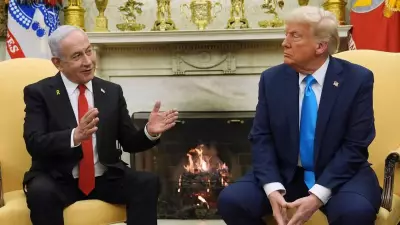
US President Donald Trump appeared to dismiss Russia's allegation by sharing a link on Truth Social to a New York Post editorial questioning the strike's validity. The post, headlined "Putin 'attack' bluster shows Russia is the one standing in the way of peace," followed a briefing by CIA Director John Ratcliffe, who updated Trump on the intelligence review.
Global Leaders Express Concern
The reported incident drew reactions from global leaders. Prime Minister Narendra Modi said he was "deeply concerned" about the situation. Pakistan's Prime Minister Shehbaz Sharif described the alleged attack as "a heinous act."
Trump earlier told reporters he was "very angry" after Putin said during a phone conversation that Ukrainian drones had targeted his residence, known as Dolgiye Borody (Long Beards), located along a lakeshore in northwestern Russia. This allegation surfaced shortly after Trump held a nearly three-hour meeting with Ukrainian President Volodymyr Zelenskyy, which he described as "excellent."
The US intelligence assessment, leveraging tools like satellite imagery and intercepted communications, underscores the ongoing information war surrounding the conflict. It positions Russia's claim not as a factual report of an assassination attempt, but as a potential strategic narrative aimed at justifying a hardened stance in negotiations and mobilizing domestic opinion.