

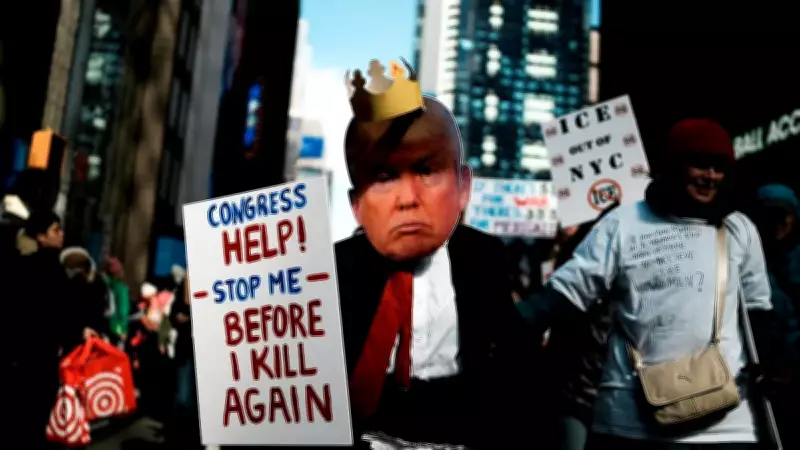
Massive Protests Sweep US Cities in Opposition to Trump's Policies and Iran War
In a powerful display of public dissent, thousands of protesters took to the streets across the United States, voicing strong opposition to President Donald Trump's policies and the potential for war with Iran. The demonstrations, organized by various activist groups, saw participants from diverse backgrounds unite under banners and chants, with the rallying cry of "No Kings" echoing through the crowds to reject authoritarian tendencies in governance.
Widespread Demonstrations in Major Urban Centers
The protests were notably concentrated in key metropolitan areas, including Washington D.C., New York City, Los Angeles, and Chicago. In Washington D.C., a large gathering assembled near the White House, where speakers condemned the administration's foreign policy moves, particularly regarding Iran. Marchers carried signs reading "No War with Iran" and "Resist Trump," highlighting fears of escalating military conflict and dissatisfaction with domestic policies on immigration, healthcare, and the environment.
Key Issues Driving the Protests
Opposition to Iran War: A central theme of the protests was the vehement rejection of any military action against Iran. Protesters expressed concerns that such a conflict could lead to widespread instability in the Middle East and unnecessary loss of life, citing recent tensions and Trump's aggressive rhetoric toward the Iranian government.

Criticism of Trump's Policies: Beyond foreign affairs, demonstrators targeted a range of Trump's domestic policies. Issues such as the travel ban, rollbacks of environmental regulations, and attempts to repeal the Affordable Care Act were frequently mentioned, with many arguing these actions undermine democratic values and human rights.
Anti-Authoritarian Sentiment: The chant "No Kings" served as a symbolic rejection of perceived authoritarianism, with protesters emphasizing the importance of checks and balances in a democratic system. This reflected broader anxieties about the erosion of institutional norms under the current administration.
Organizational Efforts and Public Response
The protests were coordinated by a coalition of grassroots organizations, including peace groups, civil rights advocates, and progressive movements. Social media played a crucial role in mobilizing participants, with hashtags like #NoWarWithIran trending online. Law enforcement reported the events as largely peaceful, with minimal incidents of disruption, though some minor clashes were noted in a few locations.
Public response has been mixed, with supporters of the protests praising the exercise of free speech and opposition to war, while critics argue that such demonstrations could undermine national unity. The scale of the protests underscores deep political divisions in the US, as the 2020 election approaches.
Implications for US Politics and Foreign Policy
These demonstrations highlight growing public unease with Trump's leadership style and policy directions. Analysts suggest that sustained protest movements could influence political discourse, potentially pressuring lawmakers to reconsider support for military interventions or controversial domestic measures. The focus on Iran comes amid ongoing diplomatic strains, with the US having withdrawn from the nuclear deal and imposed sanctions, raising fears of a broader confrontation.
In summary, the widespread protests across the United States represent a significant moment of civic engagement, driven by concerns over war and governance. As tensions persist, these events may shape future political actions and public opinion, reinforcing the role of protest in American democracy.






