US Homeland Security Chief Labels Minneapolis Woman's Death as 'Domestic Terrorism'
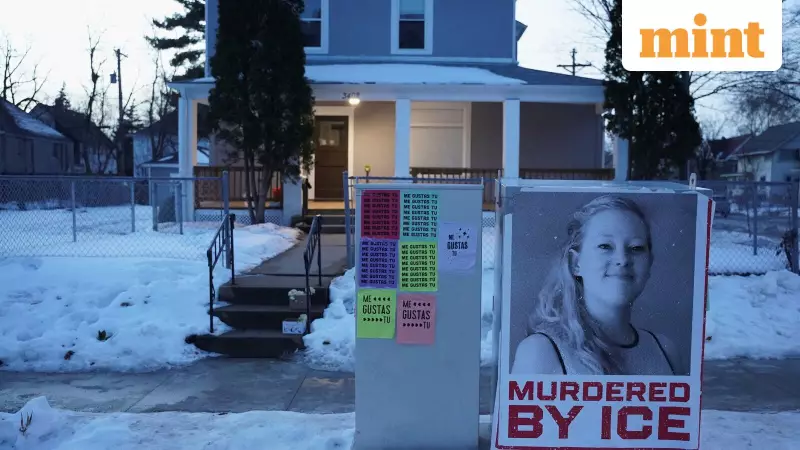
United States Homeland Security Secretary Kristi Noem has sparked controversy by describing the actions of Renee Nicole Good as 'domestic terrorism'. Good, a Minneapolis woman, was fatally shot by an Immigration and Customs Enforcement officer on January 7.
Contested Account of the Incident
Secretary Noem recently stated that Good refused orders to exit her vehicle. She claimed Good 'weaponized her car' and attempted to run over an officer. However, many Minnesota officials dispute this narrative. They point to video evidence showing Good trying to drive away from the scene rather than attack officers.
Who Was Renee Nicole Good?
Renee Good was a 37-year-old mother of three children. She had recently moved to Minneapolis, a city located along the Mississippi River in the midwestern United States. According to a BBC report, Good was a prize-winning poet and hobby guitarist. City leaders stated she was present as a legal observer of ICE activities.

Her death has triggered nationwide protests. Demonstrators across the country hold signs demanding 'Justice for Renee'. Good was a United States citizen with no criminal background, according to Associated Press reports. Her ex-husband told AP she wasn't an activist and he hadn't known her to participate in protests.
Understanding 'Domestic Terrorism' Definitions
The Trump administration has frequently used the 'domestic terrorism' phrase in recent months. This includes references to an October immigration enforcement-related shooting. In September 2025, the administration issued a memo urging law enforcement to prioritize certain threats.
The memo specifically mentioned 'violent efforts to shut down immigration enforcement'. It stated domestic terrorists were using violence to advance 'extreme views in favour of mass migration and open borders', according to a PBS report.
Domestic terrorism generally refers to acts that:
- Are dangerous to people or property
- Aim to intimidate civilians
- Seek to influence government policy through intimidation
Different US agencies have varying legal definitions. The FBI defines domestic terrorism as acts dangerous to human life that violate criminal laws. These acts must appear intended to intimidate civilians or influence government policy through intimidation or coercion.
Homeland Security uses a similar definition but cites different statutes. Their definition includes acts potentially destructive to critical infrastructure or key resources.
The Limited Legal Meaning
The legal meaning of 'domestic terrorism' remains surprisingly limited. The US government cannot formally label someone a 'domestic terrorist' under current law. While US law defines the term, it doesn't create a specific federal criminal charge for domestic terrorism itself.
This differs significantly from international terrorism, which has several prosecution statutes. A 2023 Congressional note titled 'Understanding and Conceptualizing Domestic Terrorism' explains this limitation clearly.
The note states: 'Unlike foreign terrorism, the federal government does not have a mechanism to formally charge an individual with domestic terrorism.' This absence sometimes makes formal characterization difficult and occasionally controversial.
Parallel Case: Marimar Martinez
Good's death echoes the October 2025 case of Marimar Martinez. Martinez survived being shot multiple times by a US Customs and Border Protection agent in Chicago. The Department of Homeland Security labeled that incident as domestic terrorism during 'Operation Midway Blitz'.
A DHS press release described Martinez as a 'domestic terrorist'. It accused her of ramming her vehicle into a Border Patrol agent's car. However, in November, a federal judge granted prosecutors' motion to dismiss federal charges against Martinez.
Legal analyst Joey Jackson told CNN: 'Ultimately, there was a determination when everything was evaluated that there were serious questions about the officers' narratives.'

Broadening Definitions Under Trump Administration
The Trump administration has expanded 'domestic terrorism' applications beyond immigration cases. In September 2025, after conservative activist Charlie Kirk's murder, President Trump issued a significant memo.
The memo ordered the attorney general to expand domestic terrorism priorities. It now includes 'politically motivated terrorist acts' such as:
- Organized doxing campaigns
- Swatting
- Rioting and looting
- Trespass and assault
- Destruction of property
- Threats of violence
- Civil disorder
A few days later, Trump signed an executive order designating antifa as a domestic terrorist organization. Antifa represents a broad, loosely affiliated coalition of left-wing activists.
Experts Challenge Noem's Characterization
Security experts have raised serious questions about Noem's 'domestic terrorism' label for Good. Information continues to emerge about what transpired before Good was fatally shot. Detailed analyses of video footage provide crucial context.
The New York Times and The Washington Post conducted frame-by-frame analyses. They found Good's vehicle moved toward an ICE agent, but the agent moved out of the way. The agent fired at least two of three shots from the side of the car as Good veered away.
Thomas E. Brzozowski, former Justice Department Counsel for Domestic Terrorism, spoke to PolitiFact about the case. He stated that characterizing Good's attempt to drive away as domestic terrorism 'is a stretch'.
Brzozowski expressed concern about the timing of the label. 'Essentially within hours of the incident occurring, labeling this activity as domestic terrorism strips the term of its significance,' he explained. He called the characterization a 'blatantly partisan effort to label it as domestic terrorism.'
Immigration Enforcement Context
The incident occurred against a backdrop of intensified immigration enforcement in Minneapolis. The Trump administration ramped up operations following news reports about fraud in the Somali community. Good had dropped off her six-year-old son at school and was driving home when she encountered ICE officers.
The federal government periodically revises how it describes security threats. For example, in 2025, officials sometimes used the term 'nihilistic violent extremists'. This describes perpetrators not subscribing to one ideology but motivated by a desire to 'gamify' real-life violence, as one expert explained.
The controversy surrounding Good's death highlights ongoing debates about domestic terrorism definitions. It raises questions about how the government applies these labels in politically charged situations.