

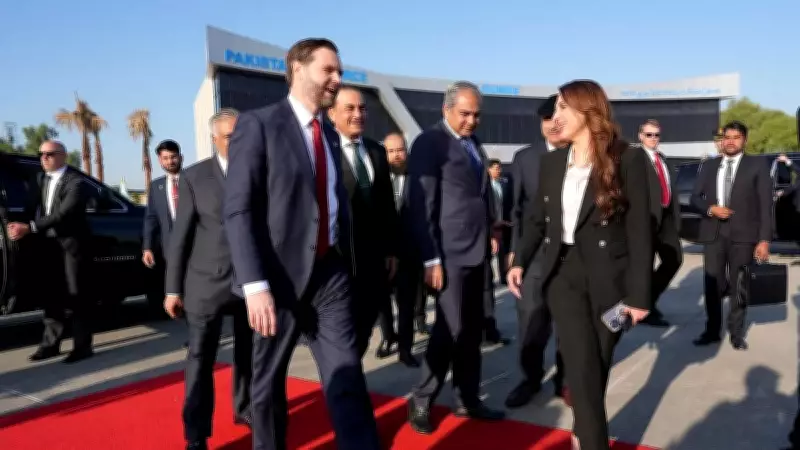
US-Iran Peace Negotiations Conclude Without Agreement
High-stakes peace talks between the United States and the Islamic Republic of Iran have officially ended in a diplomatic stalemate, marking a significant setback for regional stability efforts in West Asia. The negotiations, which involved top-level representatives from both nations, failed to bridge the deep-seated differences that have long characterized US-Iran relations.
Delegation Leadership and Negotiation Structure
The American delegation was spearheaded by J D Vance, a prominent political figure representing US interests. On the Iranian side, the talks were led by Mohammad Bagher Ghalibaf, the influential Speaker of Iran's Parliament. This high-level participation underscored the importance both nations placed on these discussions, yet it proved insufficient to overcome the entrenched geopolitical divides.
The negotiation process unfolded in two distinct phases. Initially, discussions were conducted indirectly through Pakistan, which served as an intermediary to facilitate preliminary dialogue. This indirect approach allowed both parties to exchange positions without the political pressure of face-to-face meetings. Following this preliminary stage, the talks transitioned to direct negotiations between the US and Iranian delegations, representing a more substantive engagement aimed at resolving core issues.

Factors Contributing to the Impasse
Several critical factors contributed to the eventual stalemate. Historical tensions, conflicting regional ambitions, and divergent security priorities created a complex web of challenges that proved difficult to navigate. The United States' concerns regarding Iran's nuclear program and regional influence clashed directly with Iran's demands for sanctions relief and recognition of its strategic interests in the Middle East.
The political context further complicated matters. With former President Donald Trump's administration having established a particular approach to Iran policy, the current US position reflects both continuity and evolution in Washington's Middle East strategy. Similarly, Iran's domestic political landscape, with its various power centers and hardline factions, imposed constraints on Ghalibaf's negotiating flexibility.
Regional Implications and Future Prospects
The failure to achieve a breakthrough in these peace talks has significant implications for regional stability in West Asia. The stalemate maintains the status quo of tension and uncertainty that has characterized US-Iran relations for decades. Neighboring countries and global powers monitoring the negotiations will now need to reassess their diplomatic approaches to the region.
While the current round of talks has concluded without agreement, diplomatic channels remain open through various intermediaries. The experience of both indirect and direct negotiations may inform future engagement strategies, though the fundamental disagreements that led to this stalemate suggest that substantive progress will require significant political will from both Washington and Tehran.
The international community continues to watch developments closely, recognizing that US-Iran relations represent one of the most consequential diplomatic challenges in contemporary global affairs. The stalemate underscores the complexity of reconciling competing national interests in a region marked by historical grievances and strategic competition.






