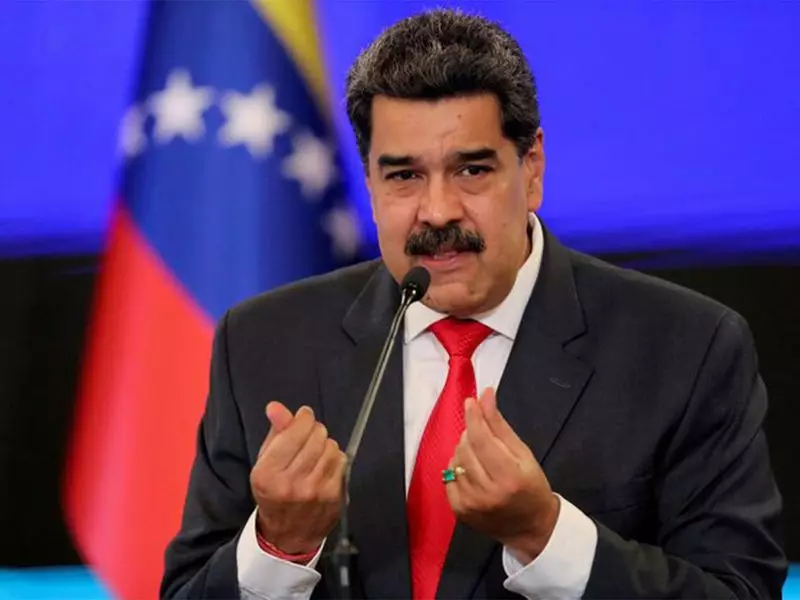
In a significant escalation of its ongoing pressure campaign, the United States has imposed fresh financial sanctions on individuals closely linked to Venezuelan President Nicolas Maduro. The action, announced by the US Treasury Department on May 16, 2024, specifically targets three individuals, including members of Maduro's family and their associates.
Targets of the Latest Sanctions
The Treasury Department's Office of Foreign Assets Control (OFAC) designated three people for their alleged involvement in activities that undermine democracy and engage in corrupt practices in Venezuela. The sanctioned individuals are Yosser Guedez, Yamileth Guedez, and Jose Gregorio Velazquez.
Yosser Guedez and Yamileth Guedez are identified as the adult children of Delcy Rodriguez, who serves as Venezuela's Vice President. Jose Gregorio Velazquez is described as a close associate of the Guedez family. The US alleges that these individuals have exploited their relationships with powerful political figures to amass wealth through corrupt business dealings.

Accusations of Corruption and Undermining Democracy
The core of the US accusation revolves around a pattern of alleged corruption. According to the Treasury Department, the sanctioned individuals have used their access to the Maduro regime to orchestrate opaque contracts with Venezuela's state-owned companies. These deals, often involving the procurement of overpriced goods and services, are said to have generated significant illicit profits for them and their network.
The sanctions are framed as a direct response to actions that perpetuate Maduro's hold on power and enrich his inner circle at the expense of the Venezuelan people. By cutting off their access to the US financial system and freezing any assets under US jurisdiction, the Biden administration aims to disrupt these corrupt financial flows.
Continuation of US Pressure Strategy
This move is not an isolated event but part of a sustained strategy. The United States has maintained a robust sanctions regime against the Maduro government for years, aiming to force political concessions and a return to democratic elections. These latest measures signal that the pressure will continue, even as the US has shown some flexibility, such as temporarily easing some oil sanctions last year contingent on electoral reforms.
The timing is also notable, coming amidst Venezuela's ongoing political and economic crisis. The US has repeatedly stated that sanctions relief is directly tied to concrete steps by Maduro towards allowing free and fair presidential elections, scheduled for July 28, 2024.
Implications and Potential Repercussions
The immediate effect of these sanctions is to isolate the named individuals from the global financial system. Any property or interests they have in the United States are blocked, and US persons are generally prohibited from transacting with them. This can severely limit their ability to travel and conduct international business.
For the Maduro government, the sanctions represent another layer of international condemnation and financial pressure. They underscore the US commitment to targeting not just high-level officials but also the extended networks that support the regime. The Venezuelan government has historically denounced such sanctions as illegal and a form of economic warfare.
The broader implication is a potential chilling effect on negotiations between the US and Venezuela. While the US action is intended to push for democratic progress, it could also harden positions in Caracas. The world will be watching to see how this impacts the upcoming electoral process and whether it leads to further escalation or renewed diplomatic engagement.
In conclusion, the May 16 sanctions by the US Treasury Department reinforce Washington's strategy of using financial tools to pressure Venezuela's leadership. By targeting the family and associates of Nicolas Maduro, the US aims to expose and penalize the corruption it believes is endemic to his administration, keeping the spotlight firmly on Venezuela's political future.