The dream of owning a home in the United States is slipping further away for millions as mortgage rates climb to punishing new heights, creating a full-blown affordability crisis. In a significant political development, former President and current Republican candidate Donald Trump has vowed to tackle the issue head-on, promising to pressure for lower interest rates if he returns to the White House. This intertwining of economic hardship and election-year politics places the US housing market and the Federal Reserve's independence squarely in the spotlight.
The Crushing Weight of Rising Mortgage Costs
The core of the crisis lies in the relentless surge of borrowing costs. Data from Freddie Mac reveals that the average rate on a 30-year fixed mortgage has skyrocketed, crossing the daunting threshold of 7.1%. This marks a dramatic jump from the record-low levels seen just a few years ago and represents the highest sustained period of high rates in over two decades. The immediate consequence is a severe erosion of purchasing power for the average American family.
To put this in stark financial terms, a homebuyer taking a loan of $400,000 at today's rate would face a monthly payment hundreds of dollars more than if they had borrowed the same amount when rates were near 3%. This has effectively priced out a significant segment of first-time buyers and middle-class families, forcing them to delay their homeownership plans indefinitely or settle for much less than they hoped for. The market has consequently slowed, with sales activity dampened as both buyers retreat and existing homeowners with ultra-low locked-in rates are reluctant to sell.

Trump's Election Pledge: A Direct Challenge to the Fed
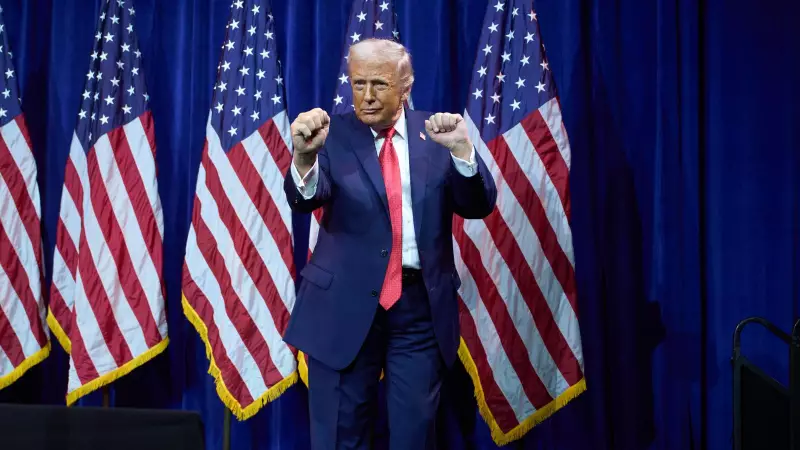
Amid this economic pain, Donald Trump has positioned himself as the solution. In recent campaign remarks, he has explicitly promised to influence interest rates downward. "We're going to bring rates down," Trump stated, framing the current high-rate environment as a failure of the Biden administration. His plan, as outlined, involves applying direct pressure on the Federal Reserve, the nation's independent central bank, to cut its benchmark rate.
This promise is politically potent but institutionally contentious. The Federal Reserve, led by Chair Jerome Powell, is designed to operate free from political interference to ensure monetary policy decisions are made for long-term economic stability, not short-term political gain. Trump's comments signal a potential return to the public clashes he had with the Fed during his first term, where he frequently criticized Powell for not cutting rates enough. His latest rhetoric raises profound questions about the future of the Fed's autonomy in a potential second Trump presidency.
The Ripple Effects and Political Battle Lines
The high-cost housing environment is not happening in a vacuum. It is intrinsically linked to the Federal Reserve's aggressive campaign of interest rate hikes, initiated to combat the worst inflation the US has seen in 40 years. While inflation has moderated from its peak, the Fed has held rates high to ensure price stability is firmly under control. This necessary medicine for the broader economy has had the side effect of crippling the housing sector.
President Joe Biden's administration has acknowledged the housing affordability problem but has largely pointed to the Fed's independence. Their focus has been on other measures, such as proposals to boost housing supply. The contrasting approaches have drawn a clear political battle line. Trump is betting that voter frustration over unaffordable mortgages will translate into electoral support for his promise of forceful intervention. The issue is set to remain a hot-button topic, resonating with voters whose aspirations of homeownership have been deferred by economic forces beyond their control.
As the 2024 election approaches, the state of the US housing market is more than an economic indicator; it is a powerful political symbol. The debate over who can truly make the American dream attainable again will hinge on promises about interest rates, the role of the Federal Reserve, and the fundamental cost of securing a place to call home.