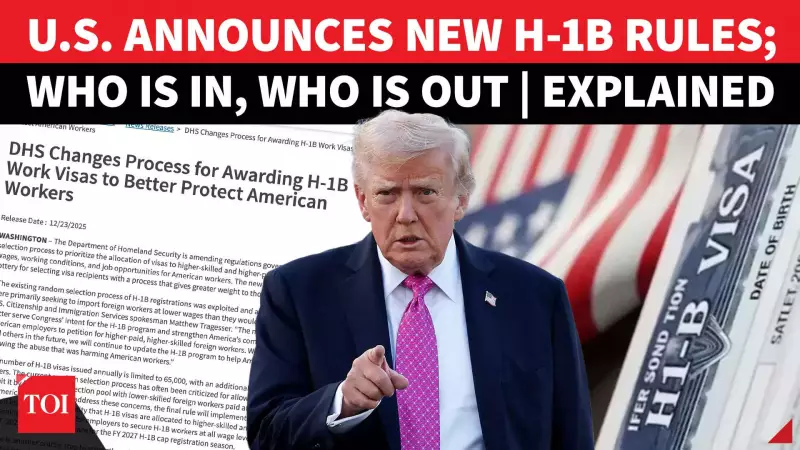
The landscape for skilled professionals seeking to work in the United States is undergoing a seismic shift. The administration under former President Donald Trump has unveiled a comprehensive reform of the H-1B work visa program, a move set to significantly alter opportunities for thousands, particularly those from India.
From Lottery to Wage-Based Selection: The Core Change
The most radical change announced is the complete replacement of the existing random lottery system for H-1B visa selection. Starting in 2026, a new weighted model will be implemented that prioritizes applications based on the offered salary. The fundamental principle is straightforward: higher-paid, highly skilled foreign workers will receive preferential treatment.
US officials defending the overhaul argue that this approach will help curb perceived abuse of the program and serve to protect wage levels for American workers. They contend that prioritizing higher wage offers ensures the visa is used to attract truly specialized global talent, not to source cheaper labor.

Indian IT Sector Braces for Major Impact
This policy shift is expected to deal a severe blow to entry-level and early-career professionals. India, which supplies a dominant portion of the H-1B workforce annually, will feel this impact acutely. A large number of Indian professionals, especially in the technology and IT services sectors, often enter the US system at these experience levels.
Critics of the new rules warn that the changes could effectively shut the door on young, talented graduates and professionals who may not command top-tier salaries immediately but contribute significantly to innovation. Industries like technology, healthcare, and research, which have long relied on a pipeline of international talent at various experience levels, could face disruption and talent shortages.
Key Takeaways and Industry Reaction
The announcement has sparked intense debate. While the administration frames it as a necessary correction to safeguard American jobs and wages, the tech industry and immigration advocates see it as a short-sighted move that could undermine US competitiveness.
The new system's emphasis on salary means companies will need to adjust their hiring strategies for foreign nationals. The anticipated consequences include:
- A sharp reduction in H-1B petitions for junior roles.
- Increased costs for companies sponsoring visas.
- A potential shift of entry-level jobs and operations to other countries, including India.
- Greater difficulty for US firms in filling specialized but lower-wage niche roles.
As the 2026 effective date approaches, Indian professionals and the companies that hire them are urged to closely review the finalized regulations and prepare for a more competitive, salary-driven visa application process.