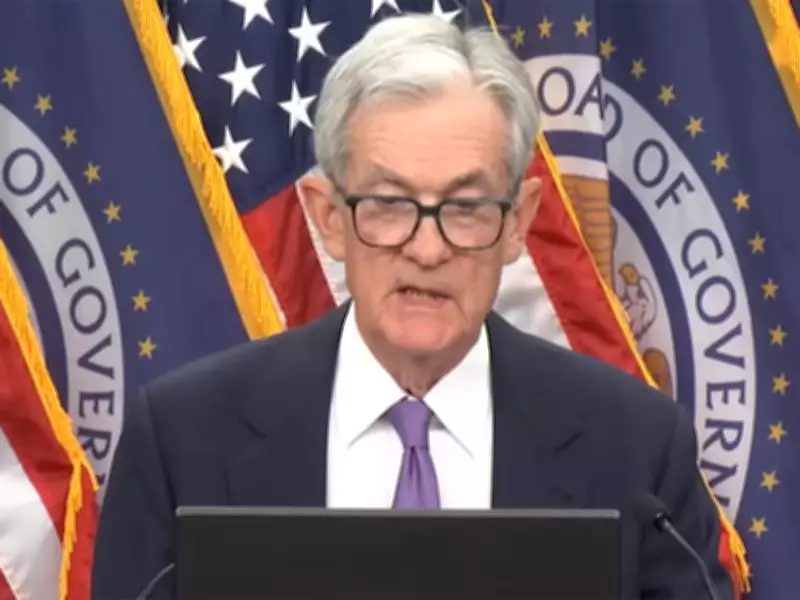
US Federal Reserve Maintains Benchmark Interest Rate Unchanged
The US Federal Reserve has announced its decision to keep the benchmark federal funds rate steady at a range of 3.5% to 3.75%. This move comes as the central bank continues to navigate a complex economic landscape marked by solid growth but persistent inflationary pressures.
Economic Indicators and Fed's Assessment
In an official press release issued on Wednesday, the Fed highlighted that economic activity is expanding at a solid pace. However, job gains have remained low, and the unemployment rate has shown little change in recent months. Inflation, a key concern, remains somewhat elevated, prompting the Fed to reiterate its commitment to achieving its dual mandate of maximum employment and a 2% inflation target over the longer term.
The statement emphasized that uncertainty about the economic outlook is elevated, with specific mention of developments in the Middle East. "The implications of developments in the Middle East for the US economy are uncertain. The Committee is attentive to the risks to both sides of its dual mandate," the Fed noted, underscoring its vigilance in monitoring global events.

Monetary Policy Stance and Future Adjustments
To support its goals, the Federal Reserve has opted to maintain the current target range for the federal funds rate. The central bank stated that it will carefully assess incoming data, the evolving economic outlook, and the balance of risks when considering any future adjustments to the rate. "The Committee is strongly committed to supporting maximum employment and returning inflation to its 2 percent objective," the release affirmed.
The Fed also outlined its ongoing monitoring efforts, which include tracking labor market conditions, inflation pressures, financial developments, and international events. It indicated readiness to adjust monetary policy if risks emerge that could impede the attainment of its objectives. This proactive stance is part of a broader strategy to ensure economic stability and growth.
FOMC Voting Details
The decision was made by the Federal Open Market Committee (FOMC), with Chair Jerome H. Powell and Vice Chair John C. Williams among the members voting in favor of maintaining the current rates. The majority of the committee supported the action, including members such as Michael S. Barr, Michelle W. Bowman, Lisa D. Cook, Beth M. Hammack, Philip N. Jefferson, Neel Kashkari, Lorie K. Logan, Anna Paulson, and Christopher J. Waller.
However, there was one dissenting vote. Stephen I. Miran voted against the decision, preferring a 0.25 percentage point cut in the federal funds rate at this meeting. This highlights the nuanced debates within the committee regarding the appropriate monetary policy path amid current economic conditions.
Overall, the Fed's decision reflects a cautious approach as it balances the need to control inflation with supporting employment, all while navigating uncertainties in the global economy.