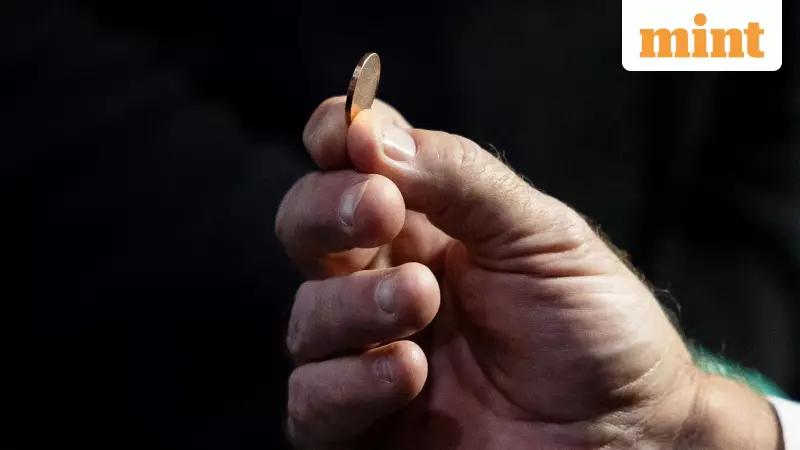
The United States has officially closed a significant chapter in its monetary history by ceasing the production of the one-cent coin, popularly known as the penny. This move, ordered by the Trump administration, brings an end to a currency tradition that spanned an impressive 232 years.
The Final Minting of an American Icon
On November 12, the United States Mint formally concluded the production of the penny. The historic event took place at the Philadelphia Mint, where US Treasurer Brandon Beach struck the final coin. The US government first began minting pennies back in 1793, a time when Philadelphia itself served as the nation's capital.
The last five pennies produced are not destined for public pockets. As confirmed by the Treasury Department, these coins were stamped with a distinctive omega mark and will not enter circulation. Instead, the government plans to auction them, with all proceeds directed first towards funding Mint operations. Any surplus funds will then be transferred to the US Treasury.

Why the Massive Valuation for the Last Pennies?
The final set of pennies is expected to attract colossal bids, with some experts estimating their value could reach a staggering $5 million at auction. The primary driver of this potential value is their status as a modern rarity.
John Feigenbaum, the publisher of the rare coin price guide Greysheet, explained the frenzy this would create among collectors. He told USA Today that collectors would "go nuts for a modern rarity of business-strike Lincoln cents." He further emphasized that the demand would be "incredible" because owning one of these pennies would become a mandatory item for anyone claiming to have a truly complete collection.
A Dose of Reality: Are They Really Worth $5 Million?
While the $5 million figure captures headlines, not all experts are convinced. Mike Fuljenz, president of Universal Coin & Bullion in Beaumont, Texas, offered a more conservative estimate. He believes the very last penny struck could fetch up to $1 million, with the second and third final coins potentially bringing in $10,000 and $20,000 respectively.
Adding a twist to the tale, a potential issue with the coins' condition has been raised. Richard Weaver, a Philadelphia-based numismatist, pointed out to phillymag.com that a photo of US Treasurer Brandon Beach holding one of the final pennies might have inadvertently damaged it. Weaver noted that holding the coin with bare fingers exposes the reactive copper to skin oils and sweat, a serious concern for any discerning collector who would consider this event when evaluating the coin's state.
The decision to stop penny production was announced by US President Donald Trump in February of this year. On his Truth Social platform, Trump called the continued production "wasteful," noting that "the United States has minted pennies which literally cost us more than 2 cents." He stated he had instructed the Secretary of the Treasury to halt new production.
What Happens to Pennies Already in Your Pocket?
For the average person, this historic change does not mean their existing pennies are worthless. Billions of pennies remain in circulation and they continue to be legal tender for all transactions. The government is not recalling or demonetizing them. However, as new pennies are no longer being added to the system, their everyday use is expected to gradually decline over time.