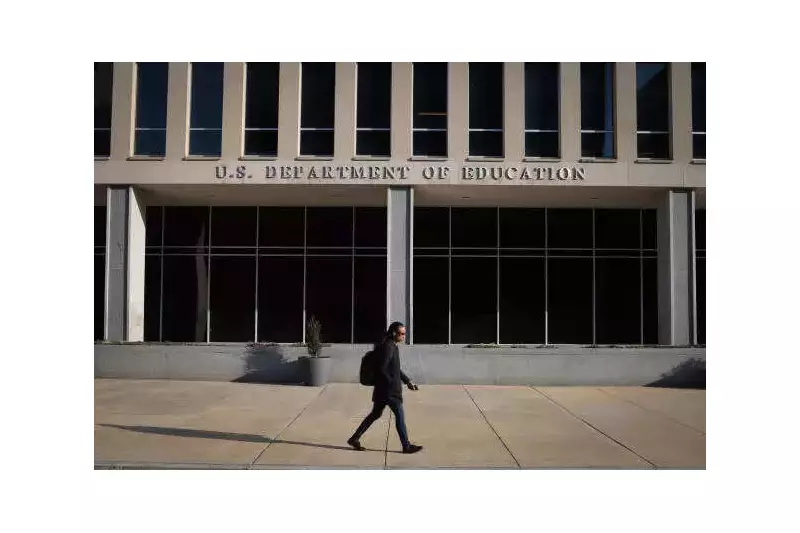
In a landmark administrative decision that could reshape American education, the US Department of Education (DOE) has begun a significant restructuring process by transferring six major federal grant programs to other cabinet departments. The move, announced on Tuesday, represents the most substantial reorganization in the department's modern history and signals potential steps toward its eventual dissolution.
Major Program Transfers: Who Gets What?
The redistribution involves six crucial education programs being handed over to four different federal departments. The Department of Health and Human Services (HHS) will now oversee childcare grants for student-parents and accreditation for foreign medical schools. This shift places vital support systems for low-income families pursuing education under health administration.
The Department of the Interior (DOI) assumes control of Native American education programs, a move that may generate significant discussion among tribal leaders who have long advocated for greater autonomy in community-based schooling.

The Department of Labor (DOL) emerges as the biggest beneficiary, taking over the DOE's K-12 and post-secondary education office. This transfer fundamentally reframes education through a workforce development lens, aligning educational priorities with labor market needs rather than traditional academic goals.
The State Department will now manage the nation's foreign language programs, positioning language acquisition as a tool of international diplomacy rather than domestic educational enrichment.
What Remains With Education Department
Despite these significant transfers, the DOE retains control over two critical components of American education. The department continues to manage the $1.6 trillion federal student loan portfolio, which forms the financial backbone of US higher education. The complexity of this massive loan system makes immediate transfer to other agencies challenging.
The department also maintains authority over funding for students with disabilities, one of the most legally sensitive aspects of federal education oversight. These programs are governed by specific statutes that cannot easily migrate between departments.
Broader Implications for Education Policy
This restructuring represents more than routine administrative changes. It reflects a philosophical shift that aligns with long-standing political efforts to reduce federal involvement in education and return control to states and local markets. The move could fundamentally alter how education funding flows and how accountability systems function across the United States.
Education policy experts note that this fragmentation of responsibilities across multiple agencies with different core missions may challenge educational coordination and coherence at the national level. The question remains whether this decentralization will strengthen American education or dilute its effectiveness.
As the Department of Education, established in 1980, begins this unprecedented restructuring, the nation watches closely. The department now stands at a crossroads between relevance and obsolescence, retaining financial and legal responsibilities while shedding vital educational programs that defined its mission for decades.