US Shuts Down Embassies in Saudi Arabia and Kuwait Following Drone Strikes
The United States has taken decisive action by closing its embassies in Saudi Arabia and Kuwait after a series of drone attacks targeted diplomatic facilities. This move comes as Iran expands retaliatory strikes against American and allied interests across the region, signaling a potential escalation in military operations in the coming weeks.
Embassy Damage and Immediate Threats
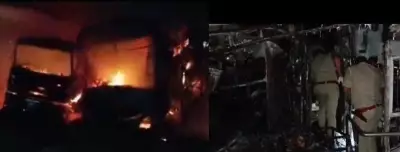
The US Embassy in Riyadh sustained minor damage after Saudi authorities reported that two drones struck the compound. A day earlier, a drone attack caused a fire at the US Embassy compound in Kuwait, according to US officials who were not authorized to speak publicly. Separately, the US Embassy in Saudi Arabia issued a stark warning of "imminent" missile and UAV threats over Dhahran, urging citizens to take cover immediately and avoid the consulate.
In a post on social media platform X, the embassy stated, "There is a threat of imminent missile and UAV attacks over Dhahran. Do not come to the US Consulate. Take cover immediately in your residence on the lowest available floor and away from windows. Do not go outside." Authorities advised residents to seek shelter if they hear sirens or explosions, noting that even intercepted projectiles could produce dangerous debris.

Evacuation Orders for Americans Across the Middle East
Washington has urgently advised US citizens to "depart now" from 14 countries across the Middle East, citing serious safety risks. The advisory covers:
- Iran, Israel, Saudi Arabia, Qatar, and the United Arab Emirates
- Bahrain, Egypt, Iraq, Jordan, Kuwait, Lebanon, Oman, Syria, Yemen, and the Palestinian territories
The State Department has also ordered nonessential staff and their families to evacuate from Bahrain, Iraq, Jordan, Kuwait, Qatar, and the UAE. Assistant Secretary Mora Namdar emphasized that Americans should use available commercial transport and contact emergency consular lines if assistance is needed.
Trump Signals Potential Escalation and Ground Troops
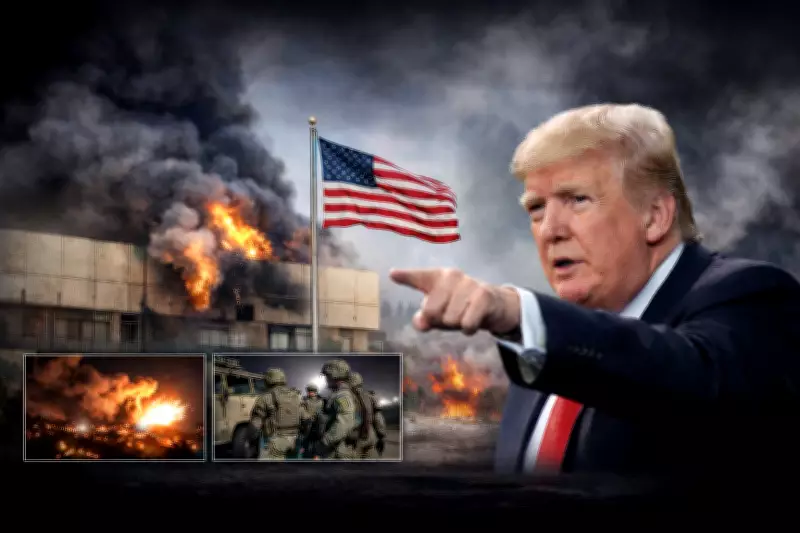
US President Donald Trump indicated that the military campaign against Iran could last weeks and potentially escalate further. He stated, "We haven't even started hitting them hard. The big wave hasn't even happened. The big one is coming soon." Trump also declined to rule out deploying American ground forces, saying, "I don't have the yips with respect to boots on the ground. Every president says, 'There will be no boots on the ground.' I don't say it."
Secretary of State Marco Rubio warned that "the hardest hits are yet to come from the U.S. military," while Defence Secretary Pete Hegseth asserted, "We'll go as far as we need to go," insisting the conflict would not resemble past US interventions in Iraq or Afghanistan.
Conflict Widens Across the Gulf and Levant
The fighting has broadened beyond Iran and Israel. Qatar reported that its air force shot down two Iranian Su-24 bombers approaching its airspace, marking the first reported use of Iranian warplanes in the conflict. Saudi Arabia said drones targeted the Ras Tanura oil refinery, though air defences intercepted them. Attacks have also been reported on infrastructure in Dubai, including its international airport and commercial facilities.
A senior official with Iran’s Revolutionary Guard warned that "not a single drop of oil" would pass through the Strait of Hormuz, a key artery that carries roughly one-fifth of the world’s oil supply. Shipping traffic through the strait has slowed sharply amid rising threats.
Mounting Casualties and Market Turmoil
The Pentagon confirmed that the number of US service members killed in Iranian strikes has risen to six. Iranian authorities report more than 550 deaths in US and Israeli strikes since hostilities began. Lebanon’s health ministry reported at least 31 deaths, while Israel has confirmed at least 10 fatalities. Gulf states have also reported casualties.
Financial markets have reacted sharply to the escalating conflict:

- Brent crude surged above $80 a barrel, its highest level since 2024
- Natural gas prices have roughly doubled since the conflict began
- Equity markets in Asia and Europe fell steeply, with US stocks set to open lower
American universities with campuses in the Middle East have shifted classes online or suspended operations amid security concerns.
Diplomatic Fallout and Regional Implications
President Trump was scheduled to meet German Chancellor Friedrich Merz in Washington, with discussions expected to focus on the escalating crisis. As embassies shut, civilians evacuate, and military rhetoric intensifies, the central question remains whether Washington is preparing for a prolonged confrontation with Tehran. With Trump warning of a coming "big wave" of strikes and refusing to rule out boots on the ground, the region appears braced for further escalation, raising fears of a wider conflict with global economic and security repercussions.