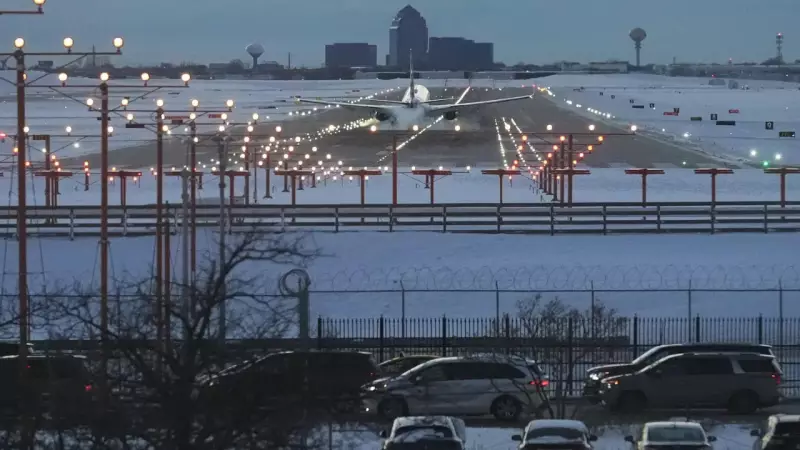
A fierce winter storm, named Winter Storm Ezra, transformed into a powerful "bomb cyclone" on Monday, wreaking havoc across a vast stretch of the United States. The storm's rapid intensification triggered massive travel chaos and power outages during one of the year's busiest holiday travel periods, leaving thousands of passengers stranded.
Travel Gridlock as Flights Grounded and Roads Turn Treacherous
The storm's impact on transportation was severe and immediate. By Monday afternoon, over 750 flights were cancelled and nearly 6,000 were delayed nationwide, as reported by FlightAware. Major airports like Washington Dulles, Boston, Newark, and Detroit faced significant disruptions, implementing ground stops or delays due to fierce winds and poor visibility. Detroit Metropolitan Airport specifically halted all Delta Air Lines operations for a period.
In response to the chaos, major carriers including American Airlines, United Airlines, Delta, and JetBlue waived change fees for affected travellers. The problems began days earlier; since Friday, weather woes have led to more than 3,600 cancellations and over 30,000 delays across the country.

Road travel proved equally dangerous. Icy pavements, blowing snow, and near-zero visibility caused multiple vehicle pile-ups in several states. Authorities in the Upper Midwest and Great Lakes regions pleaded with residents to avoid any non-essential travel, with the Federal Emergency Management Agency (FEMA) highlighting the perilous driving conditions.
Understanding the Fury of a Bomb Cyclone
So, what exactly is a "bomb cyclone"? It is a meteorological term for a midlatitude storm that undergoes bombogenesis, meaning it intensifies at an explosive rate. This occurs when the central atmospheric pressure drops sharply—by at least 24 millibars—within 24 hours. This rapid strengthening fuels hurricane-force winds, heavy snowfall, ice, and flooding rains.
Meteorologists explained that Winter Storm Ezra gained its strength from the collision of frigid Arctic air with lingering warmer air in the southern US. This clash resulted in dramatic temperature plunges. Parts of the central US saw temperatures drop by nearly 50 degrees Fahrenheit overnight, while Philadelphia experienced a fall from around 60°F during the day to the low 20s at night.
Widespread Power Outages and Hazardous Conditions
The storm's fury extended beyond travel, crippling power infrastructure for hundreds of thousands. More than 350,000 customers were without electricity by Monday afternoon, with Michigan being one of the hardest-hit states. In upstate New York alone, freezing rain and high winds knocked out power for over 57,000 customers.
Blizzard conditions engulfed areas of the Plains, Midwest, and Great Lakes. Wind chills plummeted to a dangerous minus 30°F in North Dakota and Minnesota. Michigan's Upper Peninsula was buried under up to two feet of snow, with strong winds creating life-threatening whiteout conditions. The Great Lakes themselves turned violent, with waves on Lake Superior reaching 20 feet, forcing cargo ships to dock. Near Buffalo, on Lake Erie, strong winds pushed water levels up, raising concerns of lakeshore flooding.
As the storm system pushes eastward, forecasters warn that hazardous conditions will persist into early Tuesday. The Northeast braces for freezing rain, while New York faces additional lake-effect snow and potential whiteouts. Authorities continue to urge the public to monitor weather alerts and flight advisories closely as this powerful bomb cyclone continues its march across the country.