US Accuses China of Covert Nuclear Tests Amid Expiry of Key Arms Treaty
The United States has leveled serious allegations against China, accusing it of secretly carrying out nuclear explosive tests. This accusation comes at a critical juncture, as Washington and Moscow have acknowledged the urgent need to initiate fresh arms control negotiations following the formal expiration of the last remaining US–Russia nuclear treaty.
Allegations of Concealed Nuclear Activity
Speaking at the UN-backed Conference on Disarmament in Geneva, top US arms control official Thomas DiNanno stated that China had conducted covert nuclear tests and attempted to conceal them. According to the Associated Press, DiNanno said, "The US government is aware that China has conducted nuclear explosive tests, including preparing for tests with designated yields in the hundreds of tons." He alleged that China's military sought to hide this activity because it knew such tests violated commitments to suspend nuclear testing.
US officials have renewed pressure on Beijing to be part of any future nuclear arms agreement. US Secretary of State Marco Rubio emphasized that an arms control framework excluding China would leave the United States and its allies "less safe", pointing to what he described as China's rapidly expanding nuclear arsenal.

China's Strong Rejection and Diplomatic Exchange
China has strongly rejected these claims. Ambassador Shen Jian called the allegations "false narratives and unfounded accusations", insisting that Beijing continues to honor its pledge to suspend nuclear testing. He argued that US criticism was aimed at shifting responsibility for nuclear disarmament and justifying what he described as American "nuclear hegemony".
This sharp diplomatic exchange occurred just one day after the New Strategic Arms Reduction Treaty (New START) formally expired. This treaty had capped each side at 1,550 deployed nuclear warheads, and its expiration removes limits on the world's two largest nuclear arsenals for the first time in over 50 years.
Post-New START Developments and Negotiations
According to the Kremlin, Russian and US negotiators meeting in Abu Dhabi discussed the future of nuclear arms control and agreed on the need to launch talks quickly. Kremlin spokesman Dmitry Peskov stated that both sides understood the importance of acting responsibly and beginning negotiations "as soon as possible".
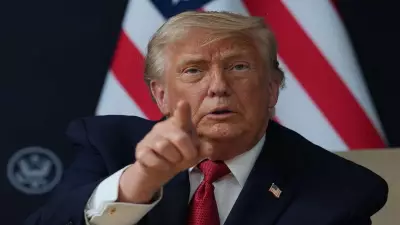
Russian President Vladimir Putin has offered to stick to New START limits for another year if Washington does the same, but US President Donald Trump has not accepted this proposal. Instead, Trump has argued for a new and broader agreement that includes China. When asked about reports of a possible informal extension of the treaty limits, Peskov dismissed the idea, saying any extension would need to be formal.
Meanwhile, in a positive development, the US and Russia have agreed to restore high-level military-to-military dialogue, which had been suspended since 2021.
China's Refusal to Join Talks and Growing Concerns
Washington insists that China's growing nuclear stockpile makes its inclusion essential in any future agreement. Rubio noted that China's arsenal had increased from the low 200s to more than 600 warheads since 2020 and could cross 1,000 by 2030. DiNanno added, "As we sit here today, China's entire nuclear arsenal has no limits, no transparency, no declarations and no controls."
However, China has refused to join disarmament talks at this stage. Ambassador Shen argued that Beijing's nuclear capabilities are not comparable to those of the US or Russia and urged the two biggest nuclear powers to shoulder primary responsibility for disarmament. He also expressed regret over the expiry of New START and called on Washington to accept Moscow's offer to temporarily maintain its limits.
Key facts about global nuclear arsenals:

- Russia and the US together control over 80% of the world's nuclear warheads.
- China's nuclear arsenal is expanding faster than any other country's.
- The lapse of New START has raised fears of a renewed nuclear arms race.
Despite these concerns, significant differences remain over the shape of any future agreement. Washington is pushing for a three-way deal, Moscow suggests including other nuclear powers, and Beijing refuses to take part for now. The international community watches closely as these diplomatic maneuvers unfold, with global security hanging in the balance.