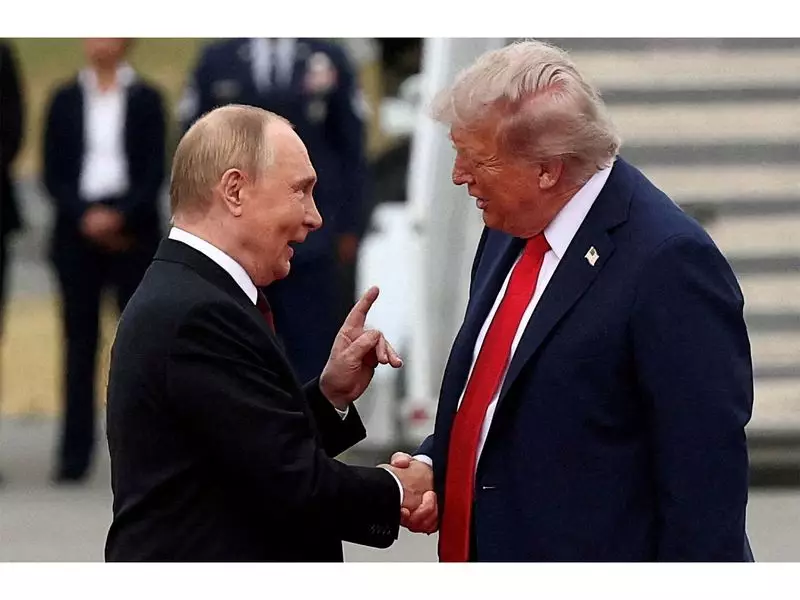
The Trump administration has drafted a preliminary peace plan for Ukraine that would involve significant territorial concessions to Russia and impose strict limitations on Ukraine's military capabilities, according to documents obtained by The Tribune.
Proposed Terms Spark Controversy
The draft proposal, prepared by key advisers to former President Donald Trump, suggests that Ukraine would cede Crimea and the Donbas region to Russia in exchange for an immediate ceasefire. This territorial concession represents approximately 20% of Ukraine's internationally recognized territory, including areas that have been under Russian occupation since 2014.
Under the proposed framework, Ukraine would be required to accept neutral status and abandon its aspirations to join NATO. The plan specifically prohibits future NATO membership and restricts Ukraine's ability to form military alliances with Western nations. This condition directly addresses one of Russia's primary stated concerns that prompted the invasion in February 2022.

Military Restrictions and Security Guarantees
The draft document outlines comprehensive military limitations that would significantly reduce Ukraine's defensive capabilities. According to the proposal, Ukraine would be barred from developing or acquiring certain categories of weapons, including long-range missiles, advanced air defense systems, and other equipment that could threaten Russian territory.
Additionally, the plan proposes strict caps on the size and composition of Ukraine's armed forces. These limitations would extend to the number of troops, tanks, artillery pieces, and combat aircraft that Ukraine could maintain. The restrictions appear designed to ensure Ukraine cannot pose a military threat to Russia in the foreseeable future.
In exchange for these concessions, the draft suggests that Russia would provide security assurances and commit to non-aggression against the remaining Ukrainian territory. However, the document lacks specific enforcement mechanisms or international guarantees that would ensure Russian compliance with these assurances.
International Reaction and Implications
The leaked draft has already generated strong reactions from European allies and within Ukraine itself. Ukrainian officials have repeatedly stated they will not negotiate away their sovereign territory, and President Volodymyr Zelenskyy has maintained that any peace agreement must respect Ukraine's territorial integrity as recognized under international law.
European leaders have expressed concern that such a plan would reward Russian aggression and set a dangerous precedent for international relations. Several NATO members have indicated they would not support any agreement that forces Ukraine to surrender territory against the will of its people.
The proposal emerges as Trump leads in several key battleground states ahead of the November presidential election. His campaign has suggested he could quickly negotiate an end to the conflict if returned to office, though specific details have remained scarce until now.
Analysts note that implementing such a plan would face significant practical and political challenges. Ukraine has consistently rejected territorial concessions, and any agreement perceived as imposed by external powers would likely face strong domestic opposition. Furthermore, the proposal does not address the status of millions of Ukrainians living in occupied territories or mechanisms for potential repatriation.
The draft document represents thinking within Trump's advisory circles rather than official U.S. policy. However, it provides the clearest indication yet of the approach a potential second Trump administration might take toward resolving the nearly two-year-old conflict that has claimed tens of thousands of lives and displaced millions of people.