

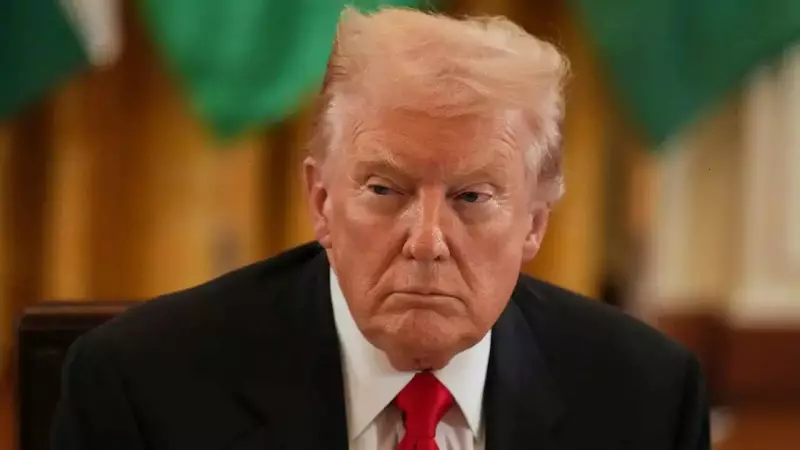
In a startling revelation that has stirred diplomatic circles, US President Donald Trump has repeatedly asserted that Prime Minister Narendra Modi called him to end military hostilities against Pakistan. This claim emerges alongside a significant congressional analysis highlighting China's growing military influence in South Asia through Pakistani battlefield successes.
The Contested Phone Call
President Trump has recounted his version of events more than 60 times, each iteration adding more dramatic details. According to the US President, PM Modi contacted him during the brief four-day conflict between India and Pakistan, stating "We're done" with the war. Trump has suggested the confrontation would have escalated to nuclear levels, potentially resulting in nuclear dust over Los Angeles.
However, New Delhi has consistently denied these assertions. Indian officials maintain that no telephone conversation occurred between the two leaders during or immediately following the military engagement. This contradiction raises questions about the accuracy of Trump's narrative amid ongoing geopolitical tensions.

Congressional Report on Chinese Military Dominance
The timing of Trump's statements coincides with the release of a significant document from the US-China Economic and Security Review Commission (USCC). The bipartisan panel's 2025 Annual Report to Congress presents a contrasting perspective, attributing Pakistan's military achievements to sophisticated Chinese weaponry.
According to the comprehensive analysis, Chinese arms constituted 82% of Islamabad's weapons imports between 2019 and 2023. The report specifically highlights the combat effectiveness of HQ-9 surface-to-air missiles and Wing Loong II drones in countering Indian military operations during the four-day confrontation.
Geopolitical Implications and Arms Competition
The congressional assessment suggests Beijing opportunistically leveraged the conflict to demonstrate and market its military technology. This strategic move occurs against the backdrop of China's ongoing border tensions with India and its ambitions to expand global defense industry presence.
The report also details significant pre-conflict military cooperation between China and Pakistan, including the Warrior-VIII land exercises in October 2024 and the AMAN-2025 naval maneuvers in February. These joint operations enhanced interoperability between the two nations' forces in contested airspace.
Meanwhile, the Trump administration continues to promote American military hardware globally. Recent developments include approval of a $93 million contract to supply India with Javelin anti-tank systems and Excalibur projectiles. This sale pales in comparison to the multi-billion dollar arrangements being finalized with Saudi Arabia.
Disinformation Campaigns and Regional Impact
The USCC report reveals concerning developments in information warfare, alleging that Chinese state-linked actors orchestrated a sophisticated disinformation campaign following the India-Pakistan ceasefire. Using AI-generated deepfakes and manipulated imagery, these efforts targeted Western military equipment, particularly French Rafale jets.
This propaganda effort reportedly influenced Indonesia's decision to suspend an $8.1 billion Rafale deal in June 2025, instead showing interest in China's J-35 stealth fighter. The successful manipulation demonstrates the growing effectiveness of digital warfare in international arms markets.
The congressional analysis concludes with serious concerns about regional stability, describing South Asia as a nuclear flashpoint where miscalculation could have catastrophic consequences. The report emphasizes the urgent need for careful diplomacy and transparent communication between all involved parties to prevent escalation.






