In a striking declaration that has sent ripples across the Atlantic, former US President Donald Trump has laid out an aggressive plan to secure American influence over Greenland, explicitly aiming to block strategic advances by Russia and China in the resource-rich Arctic region.
The "Easy Way or Hard Way" Ultimatum
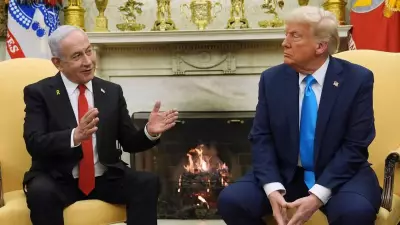
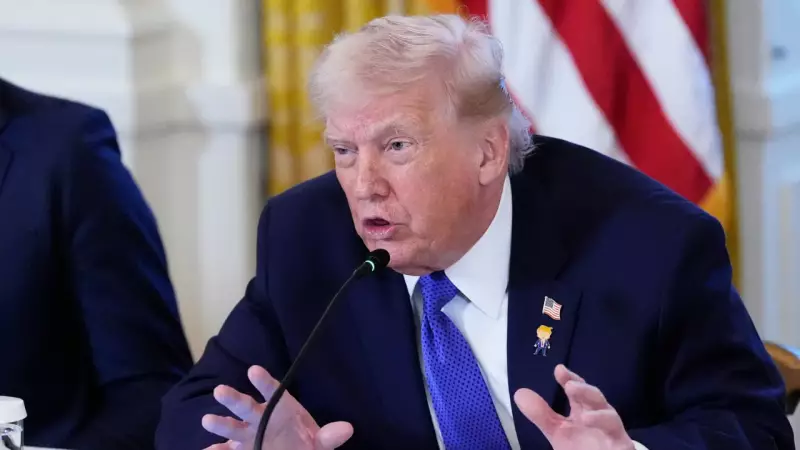
Addressing a gathering at the White House on Saturday, Trump made his intentions unmistakably clear. He stated that the United States will "do something on Greenland, whether they like it or not." The rationale, as he explained, is a direct counter to perceived geopolitical rivals. "If we don't do it, Russia or China will take over Greenland, and we're not going to have Russia or China as a neighbour," Trump asserted. He presented a binary choice for achieving this goal: "I would like to make a deal the easy way, but if not, we are going to do it the hard way."
Drawing a parallel to past foreign policy, he criticised the Obama administration's Iran deal and stressed the importance of ownership for defence. "When we own it, we defend it... Countries need to have ownership... We have to defend Greenland, because if we don't, China or Russia will," he emphasised, highlighting the island's immense strategic value.

The $6 Billion Cash-for-Influence Proposal
At the core of the Trump administration's "easy way" approach is a controversial financial incentive. According to reports cited by Reuters, officials are considering offering direct cash payments to Greenland's 57,000 residents to foster closer ties with Washington. The discussed lump sums are staggering, ranging from $10,000 to $100,000 per person.
This preliminary plan could see total payments nearing $6 billion. An alternative model under discussion is a Compact of Free Association, similar to US agreements with Pacific island nations, which trades financial aid and defence protection for military access. However, for any such deal to proceed, Greenland would likely need to first gain independence from Denmark, and the proposed cash injections could be used to sway public opinion toward that step or a future pact with the US.
International Alarm and Greenland's Stance
The proposition has triggered immediate and serious concern from European allies. Denmark, which governs Greenland as a semi-autonomous territory, has reacted with alarm. In a stark warning, it indicated that its troops in Greenland are under standing orders to "shoot first and ask questions later" if the island comes under attack. European officials have also expressed unease over the United States openly weighing military options in the Arctic.
Meanwhile, the sentiments of Greenlanders themselves add a critical layer of complexity. While polls show that a majority favour independence from Denmark, there is little appetite to swap Danish rule for American sovereignty. This public opinion poses a significant challenge to any US strategy that relies on local consent.
The situation remains fluid, with the plan in its early stages. However, Trump's unambiguous statements have sharply escalated the geopolitical stakes in the Arctic, a region increasingly viewed as a new frontier for great-power competition due to its untapped natural resources and strategic shipping routes. The world now watches to see if this high-stakes play will be pursued the "easy" or the "hard" way.