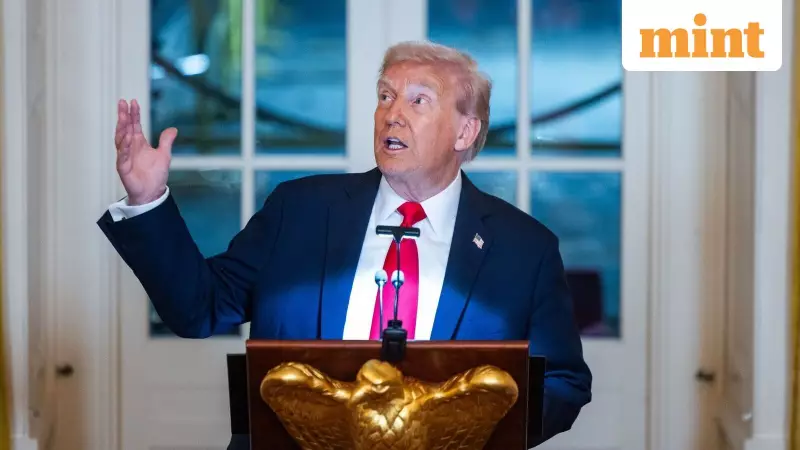
The global cryptocurrency industry, which long hoped for a more welcoming stance from the United States, is discovering that getting what it wished for comes with significant strings attached. Under President Donald Trump's second term, a wave of crypto-friendly executive orders and appointments has replaced the previous administration's enforcement-heavy approach. However, this new openness is not an olive branch to the international community but a strategic tool to assert American economic supremacy on the global stage.
From 'War on Crypto' to America First Mercantilism
For years, digital asset enthusiasts outside the U.S. viewed the regulatory approach under President Joe Biden and then-SEC Chair Gary Gensler as a "war against crypto." They believed that U.S. hostility was stifling global industry growth and hoped that an American embrace would benefit everyone. This wish has been granted, but with a distinct America First mercantilist agenda. The newly relaxed legal atmosphere is explicitly designed to ensure the U.S. remains an economic hegemon as crypto assets grow worldwide.
The Genius Act: Cementing Dollar Dominance
A cornerstone of this strategy is the Genius Act, signed into law by President Trump in June. This legislation establishes a regulatory framework for stablecoins—digital assets used for payments. The Act's driving rationale is to secure global dollar dominance. A key provision mandates that any non-U.S. issuer wanting to sell stablecoins in America must hold reserves in a U.S. financial institution to meet the liquidity demands of U.S. customers.

These reserves will inevitably be held in U.S. Treasuries, thereby increasing demand for American government debt. The Trump administration has not hidden this motive. A fact sheet for the legislation stated plainly that "Stablecoins will play a crucial role in ensuring the continued global dominance of the U.S. dollar as the world's reserve currency." While most stablecoins were already dollar-denominated, the Act legally cements this reality.
US Regulatory Oversight as a Global Veto
The Trump administration's approach extends beyond currency to regulatory control. The Genius Act requires foreign stablecoin issuers to submit extensively to the U.S. legal regime. They must register with a U.S. oversight agency and operate under a home country regulatory system that the U.S. Secretary of the Treasury deems comparable to American standards.
This provision effectively gives the U.S. government veto power over non-U.S. regulatory schemes. Foreign jurisdictions must align their laws with U.S. demands. Furthermore, this approval is not permanent. The Act requires ongoing review, allowing the Treasury to rescind its approval if it determines a foreign regime is no longer comparable. This raises questions for rapidly growing crypto economies in regions like Sub-Saharan Africa, Latin America, and Asia, which have seen adoption outpace the U.S.
International crypto enthusiasts who expected a more open system after the Gensler era may be disappointed. The U.S. strategy positions it not as an equal participant in the global digital assets marketplace, but as a hegemon, setting the default global standards with its dollars and its regulations.