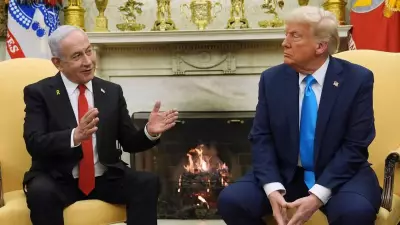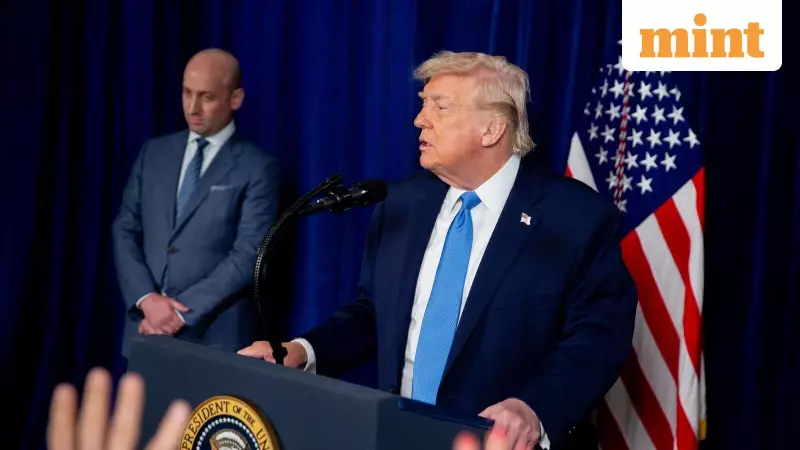
In a dramatic escalation of foreign policy, United States forces conducted a military operation in Venezuela on Saturday, leading to the capture of President Nicolas Maduro. The action was justified by Washington on grounds of alleged drug trafficking and narco-terrorism. Following this, US President Donald Trump issued a stern warning to neighbouring nations Cuba, Mexico, and Colombia, suggesting they could face similar consequences.
A Pattern of Threats to 'Troubling Neighbours'
Speaking to Fox News on the same day, President Trump expanded his critique beyond Venezuela. He claimed that Mexico was effectively controlled by powerful drug cartels rather than its elected President, Claudia Sheinbaum. "Something’s going to have to be done with Mexico," Trump stated, recounting his offers to "take out the cartels" which were allegedly declined.
His comments on Colombia and Cuba followed a similar pattern. He accused Colombian President Gustavo Petro, an ally of Maduro, of "making cocaine" and sending it into the United States. Regarding Cuba, Trump labelled it a "failing nation" and hinted at future discussions, expressing a desire to "help the people" both in Cuba and those living in the US.

The Oil Connection Behind the Interventions
While the public justifications for threats varied from drugs to protest crackdowns—as seen with a separate warning to Iran—analysts note a common thread: all four nations are significant oil producers. Shortly after Maduro's capture, Trump announced the US would "run" Venezuela, allowing American oil corporations to develop the country's vast reserves, the largest in the world at nearly 20% of the global total.
Data reveals the scale of resources at stake. Iran holds the world's third-largest reserves at an estimated 209 billion barrels. While Mexico (5.1 billion), Colombia (2 billion), and Cuba have smaller individual reserves, their combined total exceeds 7 billion barrels—approximately 15% of the United States' own reserves.
Energy Dominance and the AI-Driven Imperative
This aggressive posture aligns with a broader shift in US energy policy under Trump's second term, moving from climate transition to a focus on fossil fuel dominance. This need is further amplified by the escalating energy demands of artificial intelligence infrastructure.
Trump's AI action plan, released in July 2025, explicitly links AI dominance to energy capacity, stating America must build "vastly greater energy generation." The plan highlights China's rapid grid expansion and frames stagnant US energy capacity as a "troubling trend."
Against this backdrop, securing access to foreign oil reserves, such as Venezuela's, is seen as a strategic step. Although revamping Venezuela's infrastructure to peak production may cost billions and take years, Trump's promise to open its reserves to US companies signals a direct move to meet these soaring energy needs. Consequently, the warnings to other oil-rich nations cannot be viewed in isolation from this overarching goal of energy security for technological supremacy.