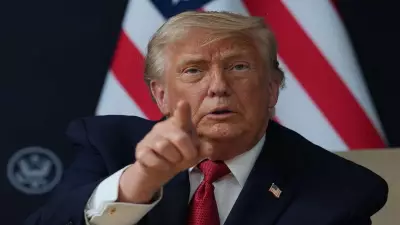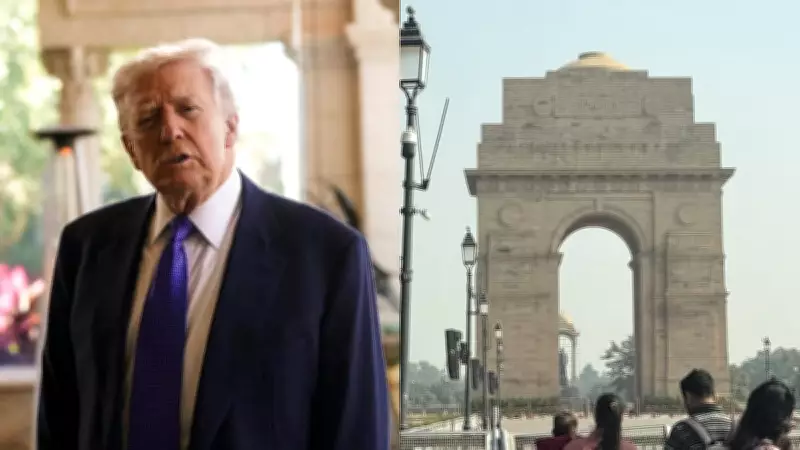
Former United States President Donald Trump has ignited international architectural discussions by sharing a photograph of India's iconic India Gate while declaring his vision for a similar American monument that would be "the greatest of them all." The controversial political figure made these remarks during an informal conversation with reporters aboard Air Force One over the weekend, revealing that his administration is actively considering the construction of a grand arc structure.
Trump's Monumental Ambition
In his characteristic bold style, Trump expressed admiration for triumphal arches worldwide, specifically mentioning the renowned Arc de Triomphe in Paris as a point of reference. However, he made it clear that his proposed American version would not merely replicate existing structures but would instead aim to surpass them in scale, grandeur, and symbolic importance. The former president's comments suggest a renewed focus on national monuments as expressions of American exceptionalism during his potential future political endeavors.
India Gate as Architectural Muse
The photograph shared by Trump features India Gate, the majestic war memorial located in the heart of New Delhi that commemorates Indian soldiers who sacrificed their lives during World War I. This 42-meter tall sandstone arch, designed by Sir Edwin Lutyens, stands as one of India's most recognizable landmarks and a powerful symbol of national pride. Trump's decision to highlight this particular structure indicates a growing international appreciation for Indian architectural heritage and its potential to inspire global monument design.

Historical Context and Political Implications
Trump's monument proposal emerges during a period of heightened attention to national symbols and historical memorials in American political discourse. The concept of constructing a new triumphal arch in the United States raises numerous questions about:
- Location considerations: Where such a monument might be situated within the American landscape
- Architectural design: How it would incorporate both traditional elements and contemporary American aesthetics
- Historical significance: What events or achievements it would commemorate for future generations
- International relations: How such comparisons between national monuments affect diplomatic perceptions
Political analysts note that Trump's focus on monumental architecture aligns with his established pattern of emphasizing visual symbols of national strength and achievement. The reference to India Gate specifically may also reflect strategic diplomatic positioning, acknowledging India's growing global influence while simultaneously asserting American ambitions.
Global Monument Competition
The conversation about triumphal arches has historically centered on European examples, particularly Paris's Arc de Triomphe commissioned by Napoleon Bonaparte in 1806. Trump's inclusion of India Gate in this architectural discourse represents a significant expansion of the conversation to include non-Western monuments of comparable grandeur and historical importance. This development suggests a shifting paradigm in how global architectural achievements are recognized and celebrated across international borders.
Architecture experts point out that while triumphal arches traditionally commemorate military victories, contemporary interpretations might expand to celebrate broader national achievements in technology, space exploration, scientific advancement, or democratic values. The specific design elements that would distinguish an American triumphal arch from its international counterparts remain undefined, leaving room for extensive public and professional debate about appropriate symbolism for 21st-century monument construction.
As news of Trump's proposal circulates through international media channels, reactions have been mixed, with some praising the ambition to create enduring national symbols and others questioning the prioritization of monumental architecture amid other pressing national concerns. The former president's comments have undoubtedly sparked renewed interest in the role of public monuments in shaping national identity and international perception in an increasingly interconnected world.