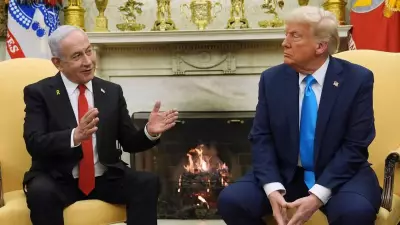
In a move that seems to blur the lines between high-stakes geopolitics and an unprecedented real estate transaction, former US President Donald Trump's team is reportedly considering a bold proposal for Greenland. The plan, as per a Reuters report, involves offering a substantial financial incentive directly to the residents of the world's largest island.
The Core of the Proposal: A Direct Financial Pitch
The central pillar of this consideration is a direct monetary offer to each citizen of Greenland. The Trump administration is planning to propose $100,000 for every resident, according to the information. The objective behind this sizable offer is to persuade the Greenlandic population to support a secession from the Kingdom of Denmark. The long-term vision, as suggested by the report, could potentially see Greenland aligning itself with the United States in some form.
This news, updated as recently as 09 January 2026, revisits an idea that surfaced during Trump's presidency but is now being actively reconsidered by his team. The strategy moves beyond governmental negotiations to appeal directly to the populace, a tactic that could significantly alter the diplomatic playbook for territorial acquisitions.

Calculating the Cost of a Strategic Island
Greenland has a population of approximately 56,000 people. A simple calculation based on the reported offer reveals the staggering scale of the proposed deal.
- Base Citizen Offer: 56,000 citizens x $100,000 = $5.6 billion.
- Additional Costs: This figure would only cover the direct payments to individuals. The total cost of such a transaction would be far higher, needing to account for infrastructure, national debt assumptions, and other sovereign liabilities.
While the $5.6 billion for citizens is a headline-grabbing number, the final price tag for acquiring the sovereignty of a vast, resource-rich territory like Greenland would likely run into hundreds of billions, if not more. The offer per citizen is thus seen as an initial incentive, not the total purchase price.
Geopolitical Motivations and Arctic Ambitions
Why would the Trump team entertain such a complex and costly idea? The answer lies in Greenland's immense strategic value in the 21st century.
Greenland's location is its primary asset. It offers dominant access to the Arctic region, which is becoming increasingly navigable and contested due to climate change. Control over Greenland would provide the US with:
- Enhanced military and surveillance positioning near the Arctic routes.
- Substantial influence over newly accessible shipping lanes.
- Access to vast untapped reserves of rare earth minerals, oil, and natural gas.
For a US administration focused on strategic competition, particularly with China and Russia, securing a permanent foothold in Greenland would be a game-changer. It would effectively extend American territory into the heart of the North Atlantic and the Arctic Circle.
Potential Repercussions and Diplomatic Hurdles
The proposal, while financially audacious, faces a labyrinth of political and legal challenges. First and foremost, Denmark has consistently and firmly rejected the notion of selling Greenland, stating it is not for sale. Greenland itself has a self-rule government, and while independence from Denmark is a topic of local debate, merging with the US is not a mainstream political position.
Furthermore, such a move would trigger significant international scrutiny. It would challenge established norms of sovereignty and territorial integrity, potentially creating ripples across global diplomacy. The reaction from allies in NATO and rivals like Russia would be immediate and complex.
The report of the Trump team considering this $100,000-per-citizen offer underscores a continued interest in unconventional methods to expand US influence. Whether this remains a theoretical proposal or evolves into a formal diplomatic initiative is a key question for global observers. The story, dated January 2026, suggests these strategic calculations are very much alive in certain political circles, setting the stage for a potentially dramatic chapter in Arctic geopolitics.