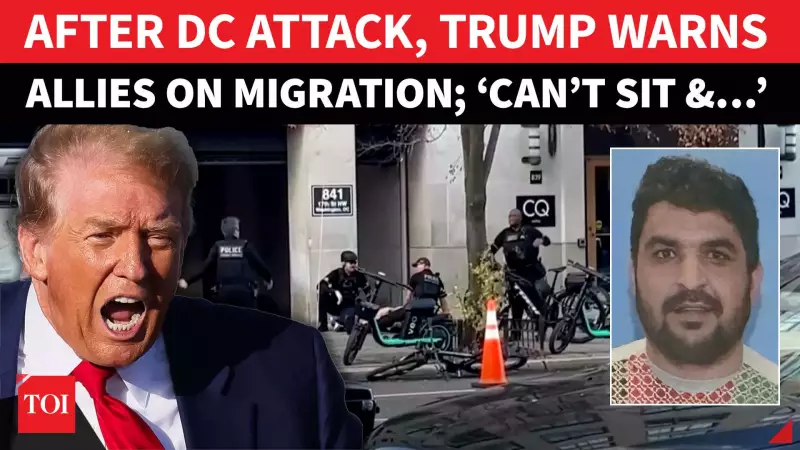
Trump Administration Takes Hard Stance on Migration After DC Attack
The Trump administration has sent shockwaves through diplomatic circles by demanding immediate action on migration from US allies. This aggressive move comes in direct response to a shocking attack near the White House that has reignited debates about immigration and national security.
A diplomatic cable circulated by the State Department, first reported by the New York Times on November 28, 2025, reveals the administration's new hardline approach. The instructions direct American missions worldwide to document crimes connected to migrants and actively lobby host countries regarding their migration policies.
Deadly Attack Triggers Policy Shift
The administration's urgent diplomatic push follows a violent incident in Washington D.C. where an Afghan asylum seeker allegedly attacked two National Guard members. The severity of the attack prompted immediate action from the White House, leading to the indefinite suspension of all Afghan immigration requests.

According to the leaked diplomatic guidance, American diplomats have been instructed to assess how foreign governments handle migrant-related crimes. They must also evaluate policies that affect local populations in host countries. This represents a significant escalation in the administration's immigration enforcement strategy.
Political Leaders Echo Security Concerns
Prominent political figures have amplified the administration's messaging. Senator Marco Rubio reportedly emphasized the direct links between migration patterns and security risks, reflecting the growing consensus within the administration for tougher immigration measures.
The DC shooting has become a flashpoint in the ongoing debate about US immigration policy. The attack has drawn both domestic and international scrutiny as the administration implements its new global migration strategy. This incident has provided the political impetus for the White House to pursue its long-stated goal of restricting immigration through asylum pathways.
The State Department's directive marks a fundamental shift in how the US approaches migration diplomacy. Rather than focusing solely on humanitarian aspects, American diplomats are now being weaponized to advance security-focused immigration policies worldwide. This development signals a new chapter in global migration management with potentially far-reaching consequences for international relations.