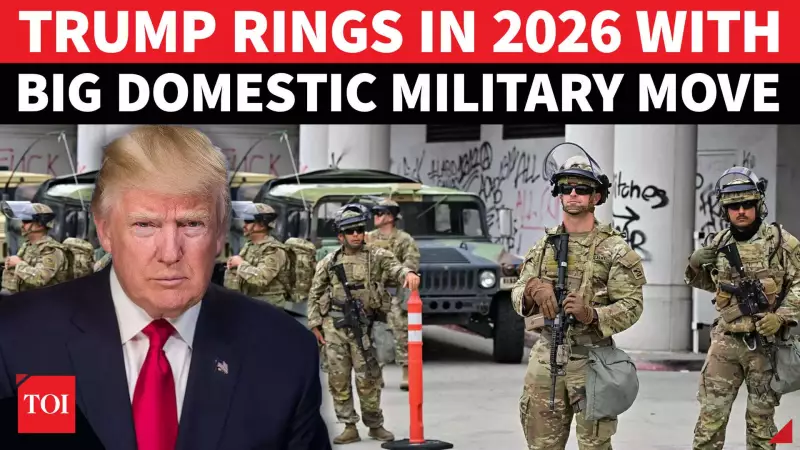
In a significant policy shift on the first day of 2026, US President Donald Trump announced the withdrawal of National Guard troops from several major American cities led by Democratic administrations. The move directly impacts Chicago, Los Angeles, and Portland, where federal troops had been stationed.
Reversal of a Controversial Deployment
The decision marks a reversal of the administration's earlier stance. President Trump had initially deployed these troops against the explicit wishes of state governors and local Democratic leaders. While governors typically hold command over their states' National Guard units, the federal deployment overrode that authority.
President Trump justified the original deployment as a necessary measure within a broader strategy targeting immigration, crime, and large-scale protests. The announcement to pull back these forces came on January 1, 2026, signaling a new direction for the administration's domestic security approach as the new year began.

Political and Operational Ramifications
The withdrawal is likely to have immediate political and operational consequences. The presence of federal troops in these cities had been a persistent point of contention, creating friction between the White House and local governments. Their removal will hand back full security control to state and municipal authorities.
This development follows a series of high-profile statements and events from the Trump administration as the year turned. Notably, the President and First Lady Melania Trump celebrated New Year's Eve at Mar-a-Lago. The announcement also comes amid other international headlines, including statements from China's Xi Jinping on Taiwan and ongoing tensions in the Ukraine conflict.
Looking Ahead: Security and Policy Shifts
Analysts will be watching closely to see how this change affects the security landscape in these major urban centers. The move raises questions about future federal intervention in city governance and what alternative strategies the administration might employ to address its stated concerns on crime and immigration.
The decision, announced at the start of 2026, sets a defining tone for the year's domestic policy agenda and intergovernmental relations. It remains a focal point in the ongoing debate over federal power, states' rights, and urban security management in the United States.