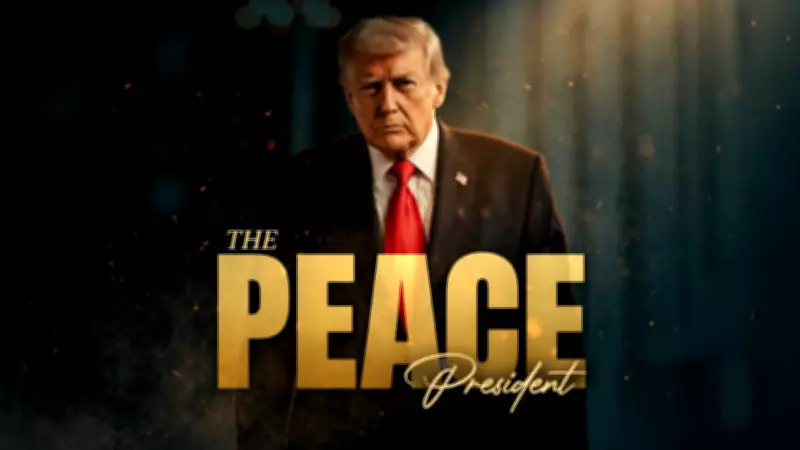
Former US President Donald Trump made a bold declaration on Friday, labeling himself "The Peace President" in a public statement. This self-proclaimed title came even as he issued fresh warnings about potential military action against Iran should current diplomatic talks break down.
Trump's Peacemaker Claims and Contradictory Warnings
The message was shared through the "Trump War Room" account on X, formerly known as Twitter, and was further amplified by Trump himself on his Truth Social platform. The post featured a digital poster that branded the former president as a global peacemaker, accompanied by the text: "Trust Trump. Tired of too many ads? Go ad-free now. Not Panicans."
This public relations push coincided with Trump taking credit for resolving multiple international conflicts during a speech at a Turning Point USA event in Phoenix, Arizona. He claimed to have "settled eight wars," specifically mentioning tensions between India and Pakistan as examples of his diplomatic achievements. Trump suggested this number could potentially rise to ten with developments involving Iran and Lebanon.

Mixed Messages on Iran Policy
Despite projecting himself as an international peace broker, Trump adopted a more combative tone when discussing Iran. He warned that Washington could escalate militarily if a satisfactory agreement is not reached before the current ceasefire expires next week.
"If we don't do a deal, we will get it in a different form — in a much more unfriendly form," Trump stated emphatically. He added that the United States naval blockade on Iran would remain firmly in place and that military action could resume immediately if negotiations collapse completely.
Trump confirmed that discussions with Tehran would continue throughout the weekend, reiterating that preventing Iran from acquiring nuclear weapons remains the top priority for American foreign policy. The former president also pointed to developments in West Asia, including a reported ceasefire between Israel and Lebanon and claims about the reopening of the Strait of Hormuz, as evidence of diplomatic progress under his approach.
Iran's Response and Upcoming Talks
Iranian officials quickly pushed back against Trump's claims regarding the Strait of Hormuz. Mohammad Bagher Ghalibaf, a prominent Iranian figure, asserted that passage through the strategically vital waterway would remain tightly controlled by Tehran and subject to its authorization. Ghalibaf emphasized that decisions concerning the strait would be determined "on the ground, not on social media," directly challenging Trump's narrative.
According to multiple reports, a fresh round of US-Iran negotiations is scheduled to take place in Islamabad on Monday. Diplomatic delegations from both nations are expected to arrive a day earlier to prepare for what could be crucial talks determining the future of relations between the two countries and regional stability.
The contradictory nature of Trump's statements—simultaneously proclaiming peaceful intentions while threatening military action—highlights the complex dynamics of US-Iran relations and the former president's unconventional approach to foreign policy. As negotiations continue, the international community watches closely to see whether diplomatic solutions or renewed conflict will emerge from these tense discussions.