Trump Administration's Harvard Admissions Lawsuit Faces FERPA Privacy Hurdles
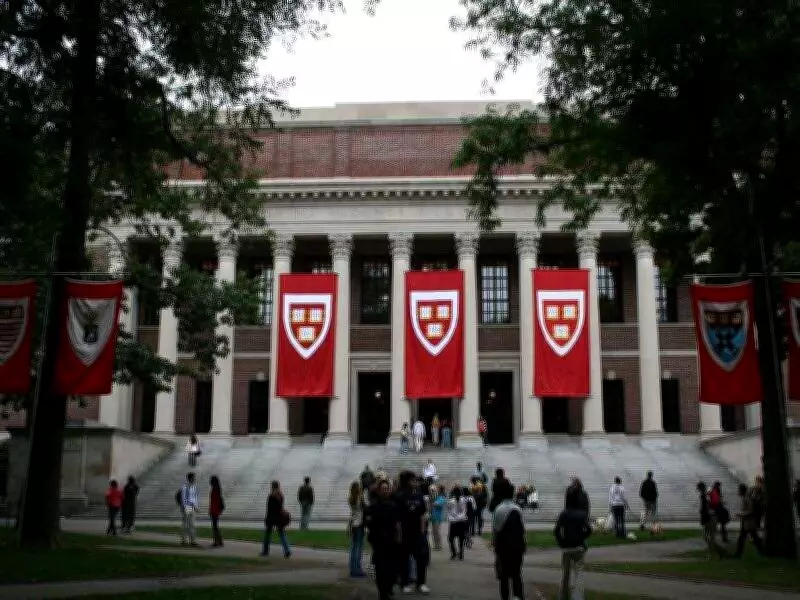
The Trump administration's Friday lawsuit seeking comprehensive admissions records from Harvard University may encounter significant legal obstacles due to the Family Educational Rights and Privacy Act (FERPA), according to legal experts interviewed by The Harvard Crimson. This federal law strictly limits the disclosure of student records that could potentially identify individual applicants, creating a substantial barrier to the government's demands.
DOJ Demands Extensive Applicant Data
The Department of Justice has specifically requested applicant-level admissions data that includes detailed academic records, standardized test scores, racial and ethnic information, and internal evaluation documents. Legal scholars have raised serious concerns that even with names removed, the combination of these multiple data points could make individual applicants identifiable, potentially violating FERPA's stringent privacy protections.
Vinay Harpalani, a professor of law at the University of New Mexico, expressed significant doubts about the administration's chances of success, telling The Harvard Crimson he would "be surprised" if they prevail. He emphasized that linking grades, test scores, race, and other personal characteristics could enable the identification of specific individuals, creating substantial privacy risks under FERPA regulations.

Post-Affirmative Action Review
According to The Harvard Crimson's reporting, the DOJ initiated this review in April 2025, seeking admissions data from Harvard College, Harvard Law School, and Harvard Medical School. The recently filed lawsuit asks a federal court to compel Harvard to provide documents related to applicant-level admissions decisions. The department claims these records are necessary to evaluate whether Harvard continues discriminatory practices following the U.S. Supreme Court's landmark 2023 ruling in Students for Fair Admissions v. Harvard, which effectively ended race-conscious admissions policies nationwide.
Jonathan D. Glater, a professor at the University of California, Berkeley, highlighted FERPA's protection of personally identifiable student information and questioned whether the DOJ possesses the legal authority to access such sensitive data outside the context of a criminal investigation. He further noted that admissions decisions involve numerous nuanced factors that extend beyond simple grades and test scores.
Escalation in Federal Dispute
The lawsuit represents the latest escalation in a months-long conflict between Harvard University and the federal government, as reported by The Harvard Crimson. This legal action follows a September 2025 ruling that struck down the White House's $2.7 billion freeze on Harvard's federal funding as unconstitutional—a decision that the Trump administration appealed in December 2025.
Paul A. Gowder of Northwestern University suggested to The Harvard Crimson that the lawsuit could be interpreted as part of a broader effort to pressure Harvard institutionally. Harvard spokesperson Jason A. Newton characterized the legal action as retaliation for the university's refusal to surrender its independence in response to what he described as unlawful government overreach.
Some legal experts interviewed expressed uncertainty about whether this case will proceed through full litigation or function primarily as leverage in ongoing negotiations between the university and federal authorities. The complex interplay between privacy protections, institutional autonomy, and government oversight continues to define this significant legal confrontation.