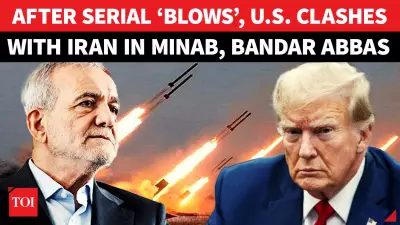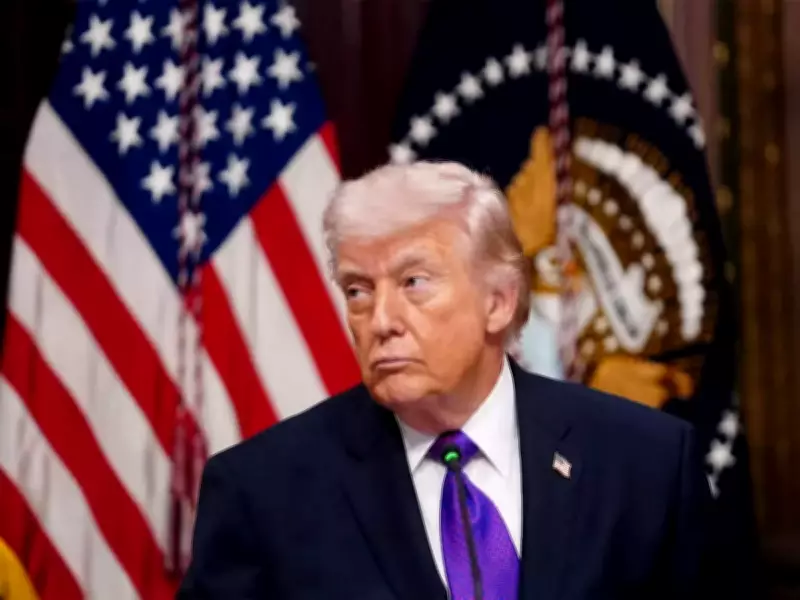
In a striking interview with the Financial Times on Sunday, US President Donald Trump declared his inclination to "take the oil in Iran," drawing parallels to US actions in Venezuela and hinting at a potential seizure of Kharg Island, Iran's primary oil export hub. This comes as the United States intensifies its military footprint in the Middle East amid a deepening crisis with Iran.
Trump's Oil Ambitions and Military Strategy
Trump stated, "To be honest with you, my favourite thing is to take the oil in Iran but some stupid people back in the US say: 'why are you doing that?' But they’re stupid people." He compared this to Venezuela, where the US plans to maintain control over the oil sector indefinitely after capturing leader Nicolás Maduro earlier this year. Any move to seize Iranian oil would likely involve capturing Kharg Island, through which most of Iran's oil exports flow.
The US has been reinforcing its troop presence, with the Pentagon deploying around 10,000 personnel trained for ground operations, including seizing and holding territory. Approximately 3,500 troops arrived recently, including about 2,200 Marines, and another 2,200 Marines are en route, along with thousands from the 82nd Airborne Division.

Risks and Regional Escalation
Targeting Kharg Island carries significant risks, potentially leading to higher US casualties and prolonging the conflict's cost and duration. Trump acknowledged this, saying, "Maybe we take Kharg Island, maybe we don’t. We have a lot of options. It would also mean we had to be there for a while." He downplayed Iran's defensive capabilities, claiming, "I don’t think they have any defence. We could take it very easily."
The conflict has expanded recently, with an attack on a Saudi air base injuring 12 American personnel and damaging a $270 million US surveillance aircraft. Houthi forces in Yemen launched a ballistic missile toward Israel, raising fears of a wider escalation that could worsen the global energy crisis. Brent crude oil surged above $116 per barrel, nearing its highest level since the conflict began.
Negotiations and Diplomatic Moves
Despite his aggressive rhetoric, Trump noted that indirect negotiations between the US and Iran, conducted through Pakistani intermediaries, are progressing. He set an April 6 deadline for Tehran to agree to terms or face further US strikes on its energy infrastructure. When asked about a ceasefire that could reopen the Strait of Hormuz, a key oil shipping route, Trump did not provide specifics but said, "We’ve got about 3,000 targets left — we’ve bombed 13,000 targets — and another couple of thousand targets to go. A deal could be made fairly quickly."
Trump claimed Iran allowed Pakistan-flagged oil tankers to pass through the Strait of Hormuz as a "present" to Washington, with numbers increasing from 10 to 20, though this remains unverified. He attributed this to Mohammad Bagher Ghalibaf, saying, "He’s the one who authorised the ships to me. Remember I said they’re giving me a present? And everyone said: 'What’s the present? Bullshit.' When they heard about that they kept their mouth shut and the negotiations are going very well."
Leadership Changes and Speculation
Trump asserted that Iran has undergone "regime change" following the killing of longtime Supreme Leader Ali Khamenei and other senior officials in early strikes, stating, "The people we’re dealing with are a totally different group of people... [They] are very professional." He repeated claims that Mojtaba Khamenei, the new Supreme Leader and son of Ali Khamenei, may be dead or seriously injured, saying, "The son is either dead or in extremely bad shape. We’ve not heard from him at all. He’s gone."
Tehran, however, maintains that the country's leadership remains intact, insisting the Supreme Leader is safe despite his absence from public view, which has fueled speculation about his condition. As tensions mount, the region faces a precarious phase with global implications for oil markets and security.