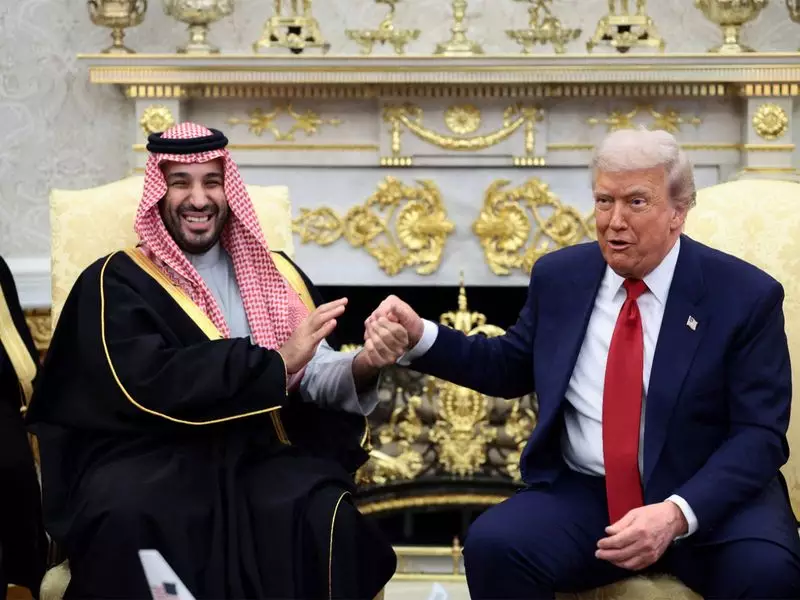
Former US President Donald Trump repeatedly echoed Saudi Crown Prince Mohammed bin Salman's denials regarding the brutal murder of journalist Jamal Khashoggi, according to multiple documented instances between 2018 and 2020.
The Parallel Denials Begin
The pattern emerged shortly after Khashoggi's disappearance on October 2, 2018, when the Saudi journalist entered the Saudi consulate in Istanbul and never emerged. As international pressure mounted, both leaders began presenting strikingly similar narratives.
In November 2018, Trump issued an official statement declaring "Maybe he did, maybe he didn't" when referring to Prince Mohammed's involvement. This mirrored the Crown Prince's own repeated assertions that he had no knowledge of what happened to the Washington Post columnist.

Consistent Pattern of Support
The alignment continued throughout Trump's presidency. During a White House press briefing on November 20, 2018, Trump explicitly stated: "The Crown Prince told me that he had nothing to do with it." He went further to suggest that rogue elements within the Saudi government might be responsible, directly echoing the initial Saudi government position.
Even after the CIA concluded with high confidence that Prince Mohammed had ordered Khashoggi's killing, Trump maintained his supportive stance. In February 2020, the President declared that the United States had "saved his ass" when referring to protecting the Saudi leader from congressional backlash over the murder.
Business Over Human Rights
The Trump administration consistently prioritized the US-Saudi business relationship over human rights concerns. Trump repeatedly emphasized the $110 billion in arms deals and economic partnerships that he claimed would be jeopardized by taking stronger action against Saudi leadership.
This position created significant tension with US intelligence agencies and lawmakers from both political parties. Multiple bipartisan efforts in Congress sought to impose sanctions and restrict arms sales to Saudi Arabia, but the Trump administration consistently resisted these measures.
The coordination between Trump and Prince Mohammed's narratives continued even as more gruesome details emerged about Khashoggi's death. Turkish officials revealed that the journalist had been dismembered with a bone saw by a 15-member Saudi hit team that included members of the Crown Prince's elite security detail.
Lasting Consequences
The repeated alignment between Trump's public statements and Saudi denials has had lasting implications for US-Saudi relations and international press freedom. The case continues to symbolize the dangers journalists face when criticizing powerful regimes.
Khashoggi, who was living in self-imposed exile in the United States, had written columns critical of Prince Mohammed's crackdown on dissent. His murder sparked global outrage and raised serious questions about the relationship between democratic governments and authoritarian regimes.
The documented pattern of Trump echoing Saudi talking points demonstrates how geopolitical and economic considerations often override human rights concerns in international diplomacy. The case remains a contentious issue in US foreign policy discussions.