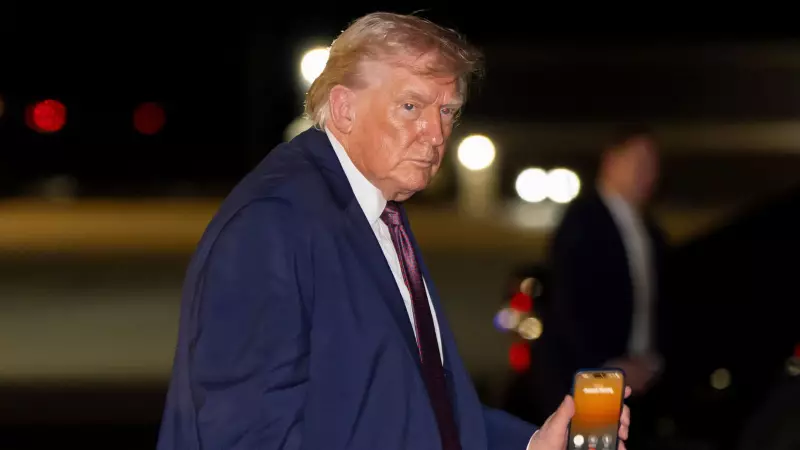
In a significant move impacting the United States' diplomatic corps, former President Donald Trump has terminated the appointments of close to thirty career diplomats from their ambassadorial roles. This sweeping action, executed just before the end of his term, marks one of the most extensive reshuffles of its kind in recent memory, targeting seasoned foreign service officers across various global postings.
Details of the Diplomatic Dismissals
The list of removed envoys includes several high-profile names who were serving in key strategic positions. Among them is Ambassador Alaina B. Teplitz, who was serving as the US envoy to both Sri Lanka and the Maldives. Similarly, Ambassador Philip S. Goldberg, the chief of mission in Colombia, was also relieved of his duties. Other notable dismissals include Ambassador Donald Lu in Kyrgyzstan and Ambassador Michael J. Dodman, who was the US representative to the International Civil Aviation Organization (ICAO) based in Canada.
This action was formalized through a document known as the "Plum Book," officially titled the "United States Government Policy and Supporting Positions." Published after the presidential election, this volume lists over 9,000 federal positions that are subject to political appointment. The ambassadors targeted in this purge were serving in roles classified as "Career Ambassador" or "Minister-Counselor" within the Senior Foreign Service, positions typically filled by non-political, career professionals.

Context and Immediate Fallout
The timing and scale of this move have raised eyebrows within diplomatic circles. Traditionally, incoming administrations make gradual changes to ambassadorial posts, often allowing for transitions to ensure continuity. The mass removal of nearly thirty career diplomats in one fell swoop is seen as a stark departure from that norm. It effectively creates immediate vacancies in numerous embassies and international organizations at a sensitive global juncture.
Experts point out that this action underscores a broader trend during the Trump administration of sidelining the professional foreign service. Throughout his tenure, President Trump frequently expressed skepticism about the State Department's career officials and favored political loyalists for top posts. This latest purge is viewed as the culmination of that approach, potentially leaving critical diplomatic missions in a state of flux as the Biden administration prepares to take over.
Implications for US Foreign Policy
The consequences of this diplomatic housecleaning are multifaceted. Firstly, it creates a leadership vacuum in several countries, which could hinder ongoing negotiations, crisis management, and day-to-day diplomatic engagement. Secondly, it sends a demoralizing signal to the career foreign service, suggesting that decades of expertise and non-partisan service can be abruptly terminated based on political considerations.
For the incoming Biden administration, this presents an immediate logistical challenge. The new team will now need to prioritize filling these sudden vacancies, a process that involves rigorous Senate confirmations and can take months. In the interim, chargé d'affaires (temporary heads of mission) will likely manage these embassies, but their authority is often perceived as lesser than that of a full ambassador, potentially weakening America's diplomatic clout on the ground.
This development also highlights the fragile nature of institutional knowledge within the US government. The removed ambassadors possessed deep regional expertise and established relationships with foreign leaders—assets that are not easily or quickly replaced. As the world watches this transition of power in Washington, the stability and effectiveness of American diplomacy face a direct test following this unprecedented shake-up.