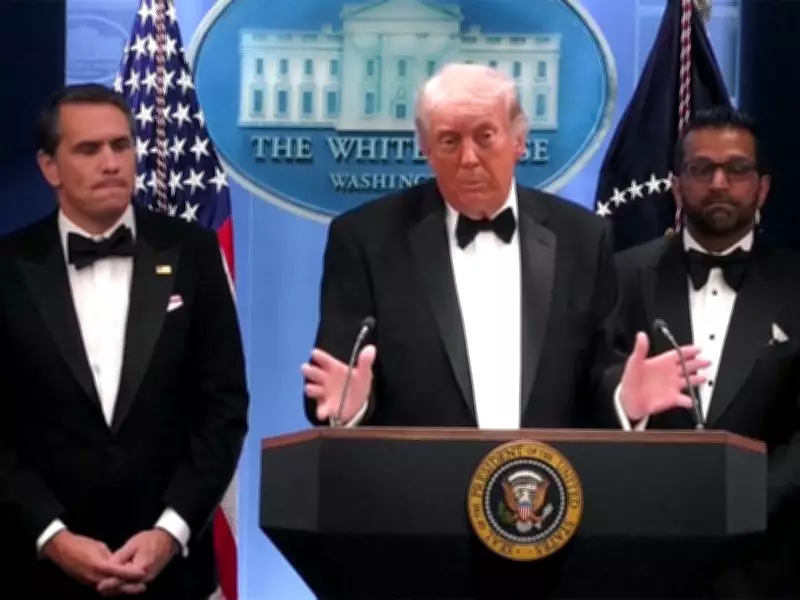
Former President Donald Trump has sparked controversy by claiming that the recent shooting at the White House Correspondents' Dinner was driven by anti-Christian bias. In a statement released on his social media platform, Trump described the incident as a 'religious thing' and suggested that the attacker targeted the event due to its perceived association with Christian values.
The shooting, which occurred during the annual dinner attended by journalists, politicians, and celebrities, left several people injured. Law enforcement officials have not yet confirmed a motive, but Trump's remarks have drawn criticism from both sides of the political aisle. Critics argue that his comments are inflammatory and unsubstantiated, while supporters claim he is highlighting a broader issue of religious discrimination in the United States.
Background of the Incident
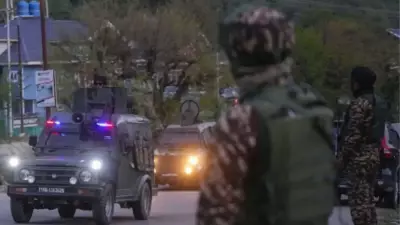
The White House Correspondents' Dinner, a tradition dating back to the 1920s, brings together members of the media, government officials, and public figures for an evening of speeches and entertainment. This year's event was marred by violence when an individual opened fire outside the venue before being subdued by security. The suspect, whose identity has not been released, is currently in custody.

Authorities are investigating potential motives, including possible political or religious extremism. However, no official statement has linked the attack to anti-Christian sentiment. Trump's claim appears to be based on his own interpretation of the events, rather than verified facts.
Reactions to Trump's Statement
Reactions to Trump's comments have been swift. White House Press Secretary Karine Jean-Pierre condemned the remarks, stating that 'it is irresponsible to speculate on motives without evidence.' She emphasized that the investigation is ongoing and urged the public to avoid jumping to conclusions.
Religious leaders have also weighed in. Reverend Susan Brooks, a prominent Christian activist, expressed concern that Trump's narrative could exacerbate divisions. 'We must be careful not to weaponize tragedy for political gain,' she said in a statement. Meanwhile, some conservative commentators have echoed Trump's sentiments, arguing that anti-Christian bias is a growing problem in American society.
Broader Context of Religious Discrimination
The discussion around religious discrimination in the U.S. is not new. Reports from organizations like the Pew Research Center indicate that while religious freedom is protected by law, instances of bias against various faiths, including Christianity, do occur. However, experts caution against conflating isolated incidents with systemic persecution.
Trump's claim comes amid a heated political climate, with the former president positioning himself as a defender of Christian values ahead of the upcoming election. Critics say this is a strategic move to rally his base, while supporters see it as a necessary stand against perceived attacks on faith.
As the investigation continues, the focus remains on the victims and their recovery. The White House Correspondents' Association has announced that it will review security protocols for future events. Meanwhile, Trump's comments have added a new layer of controversy to an already tragic incident.