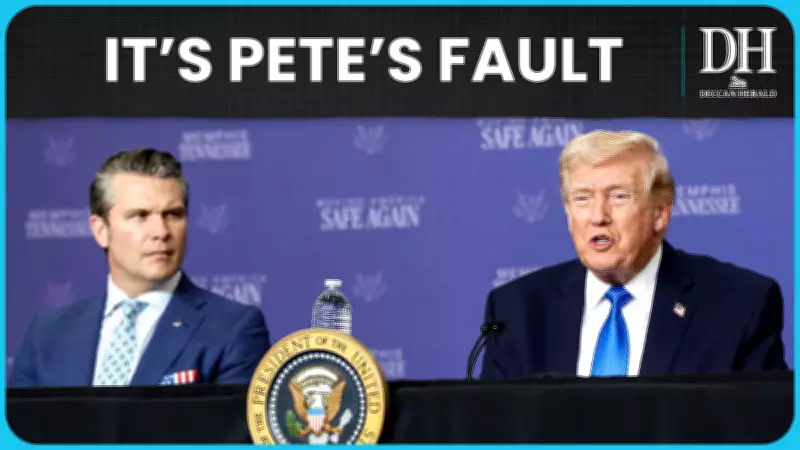
Trump Accuses Fox News Host Pete Hegseth of Responsibility for Iran War
In a surprising turn of events, former President Donald Trump has publicly shifted blame for the Iran war onto Fox News host Pete Hegseth. During a recent interview, Trump made this controversial assertion, which has since ignited widespread debate and scrutiny over accountability in foreign policy matters.
The Context of Trump's Accusation
The accusation emerged in a discussion where Trump was questioned about his administration's handling of Iran-related conflicts. Instead of accepting direct responsibility, he pointed to Hegseth, a prominent conservative commentator, as a key influence. This move is seen as part of Trump's broader strategy to deflect criticism and reshape historical narratives surrounding his presidency.
Trump stated, "Pete Hegseth was pushing for it, and I listened. He's the one who really wanted it." This remark has raised eyebrows, as Hegseth is not a government official but a media figure, highlighting the complex interplay between politics and media in shaping policy decisions.

Reactions and Implications
The reaction to Trump's claim has been mixed. Supporters argue it reflects his willingness to challenge conventional narratives, while critics view it as an attempt to evade accountability for military actions that occurred under his watch. Foreign policy experts note that such statements could impact diplomatic relations and public trust in leadership.
Key points from the interview include:- Trump's assertion that Hegseth advocated for aggressive measures against Iran.
- The timing of the interview, which coincides with ongoing tensions in the Middle East.
- Potential effects on Trump's political legacy and future campaigns.
Broader Impact on Media and Politics
This incident underscores the influential role media personalities like Pete Hegseth play in political discourse. It also raises questions about how leaders attribute responsibility for war decisions, with implications for transparency and governance. As debates continue, this story remains a focal point in discussions about U.S. foreign policy and media accountability.