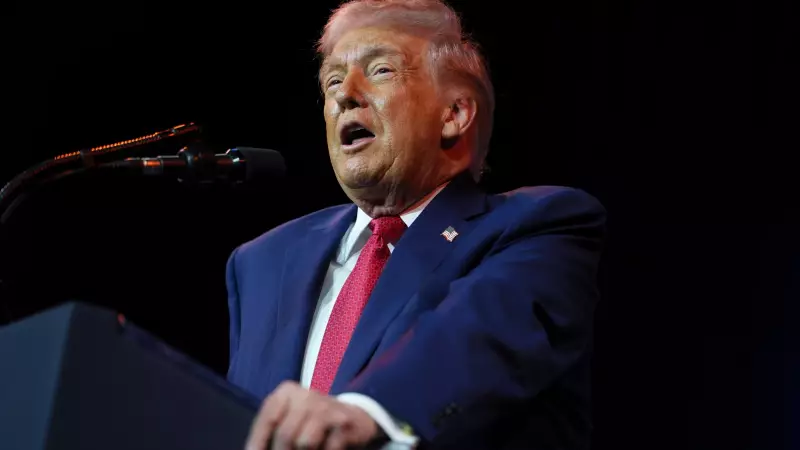
Former US President Donald Trump has launched a fierce verbal assault on members of his own Republican Party. The target of his ire is a group of GOP senators who recently voted to curtail a president's power to launch military operations against Venezuela without explicit congressional approval.
The Senate Vote That Sparked the Fury
The controversy stems from an amendment to the annual National Defense Authorization Act (NDAA). This provision, which passed the Senate, aims to repeal the 2002 Authorization for Use of Military Force (AUMF) against Iraq. That decades-old authorization has been controversially used by multiple administrations as legal justification for military actions in other countries, including Venezuela.
In a significant show of dissent, eight Republican senators broke ranks to join Democrats in supporting the repeal. The vote took place in July 2023, and the final tally was 61 to 36. The notable Republicans who voted 'yes' include Senators Rand Paul, Mike Lee, and Todd Young, among others.

Trump's Blistering Rebuke on Truth Social
Trump did not hold back in his criticism, using his social media platform, Truth Social, as his megaphone. He accused the senators of siding with the "Communist Maduro regime" in Venezuela and labeled them as "weak and ineffective RINOs" – a derogatory acronym for "Republicans In Name Only."
He framed the vote as a betrayal of a key policy achievement from his administration. "I am the one who put the toughest ever sanctions on the corrupt and violent Maduro regime," Trump stated, asserting that the senators' actions were undermining efforts to pressure Venezuelan leader Nicolas Maduro.
"How stupid and dangerous are these Republican Senators that vote to take away my authority as President to attack Venezuela, if necessary, and to keep the weak and ineffective RINOS from taking away a President’s authority," he wrote in his characteristic style.
Broader Implications for GOP and US Foreign Policy
This public rift highlights a deepening ideological divide within the Republican Party on matters of war, executive power, and foreign intervention. The faction led by Trump advocates for a strong, unilateral executive branch with broad military discretion. The dissenting senators, however, represent a growing sentiment for reasserting Congress's constitutional role in declaring war and checking presidential power.
The 2002 Iraq AUMF has long been a point of contention. While initially intended for Saddam Hussein's Iraq, successive presidents have stretched its interpretation to justify actions against terrorist groups and other nations deemed threats. Its potential repeal concerning Venezuela is seen as a step toward reclaiming congressional oversight.
The fallout from this incident is likely to influence the ongoing debate over the NDAA and could become a litmus test for Republican candidates aligning with or against Trump's vision of expansive presidential authority in foreign conflicts.
As the 2024 election cycle heats up, Trump's aggressive stance serves a dual purpose: it reinforces his "America First" foreign policy credentials to his base and sends a clear warning to any Republican lawmaker considering crossing him on issues of national security and executive power.