

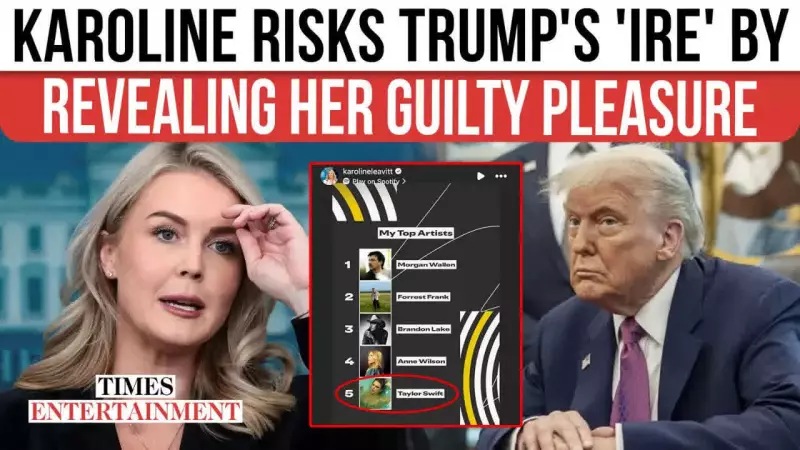
In a revelation that has created a political and cultural stir, White House Press Secretary Karoline Leavitt has disclosed that global pop icon Taylor Swift ranks among her most-streamed artists on Spotify. This personal detail, emerging from her 2025 Spotify Wrapped summary, stands in stark contrast to the public position of her boss, former President Donald Trump.
A Stark Contrast in Musical Taste and Political Stance
The disclosure, made on December 5, 2025, has taken many by surprise, including allies within Trump's circle. This is because Donald Trump has been vocally critical of Taylor Swift. His criticism escalated sharply after Swift endorsed Democrat Kamala Harris during the 2024 presidential campaign. Trump publicly slammed the singer, going so far as to call her "not hot" and declaring "I HATE TAYLOR SWIFT!".
Given this context, Leavitt's admission that she privately enjoys the music of one of Trump's most prominent critics has opened a fascinating window into the personal and political divides that can exist even within a close-knit team. The news quickly transcended the realm of mere celebrity gossip, becoming a talking point about ideology, personal preference, and professional alignment.

Social Media Erupts with Reactions
As expected, the revelation ignited immediate and intense waves of reaction across social media platforms. Critics and supporters of the Trump administration alike seized upon the irony of the situation. Many users questioned how a senior aide could reconcile her apparent personal fandom with the very public disdain expressed by the former president.
Discussions ranged from humorous memes about "secret Swifties" in the Trump camp to more serious debates about whether political aides are expected to mirror their principal's tastes and opinions in all aspects of life. The episode highlights how the personal lives of public figures, especially their consumption of art and entertainment, are increasingly scrutinized and politicized.
Broader Implications and Unanswered Questions
This incident raises several intriguing questions about the intersection of politics, personal identity, and pop culture in modern America. It underscores how figures like Taylor Swift have moved beyond entertainment to become potent political symbols. For a high-profile spokesperson like Karoline Leavitt, this personal detail inevitably becomes a public matter, subject to interpretation from all sides.
The situation also reflects a common modern dichotomy: the separation between an individual's private enjoyment of art and their public professional duties. However, in the hyper-polarized climate of U.S. politics, such separations are rarely allowed to remain private. The story continues to develop as commentators and the public dissect what this means for the unity of Trump's team and the unpredictable role of celebrity influence in political narratives.






