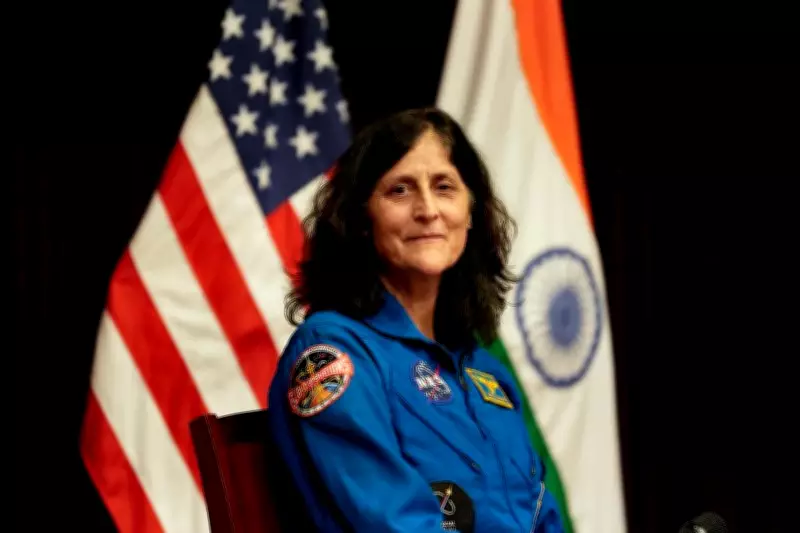
After an illustrious and groundbreaking career spanning nearly three decades, Indian-American astronaut Sunita Williams has officially retired from NASA, marking the end of a remarkable chapter in space exploration history. Her decision to pass the baton to the next generation of astronauts comes after 27 years of dedicated service, during which she became a symbol of perseverance, scientific achievement, and inspiration for millions around the globe.
A Trailblazing Journey in Space
Sunita Williams' career with NASA began in 1998 when she was selected as an astronaut candidate, and over the years, she has left an indelible mark on the field of space science. She is renowned for her record-setting accomplishments, including holding the record for the longest spaceflight by a woman at the time of her missions. Throughout her tenure, Williams participated in multiple space shuttle missions and long-duration stays aboard the International Space Station (ISS), where she conducted critical experiments and contributed to advancements in microgravity research.
Key Milestones and Achievements
During her extensive career, Sunita Williams achieved numerous milestones that have solidified her legacy as one of NASA's most prominent astronauts. Some of her notable accomplishments include:

- Completing seven spacewalks, totaling over 50 hours of extravehicular activity, which demonstrated her expertise and courage in the harsh environment of space.
- Serving as a flight engineer and commander on the ISS, where she played a pivotal role in station operations and scientific investigations.
- Setting records for the most spacewalk time by a female astronaut, showcasing her endurance and skill in handling complex tasks outside the spacecraft.
- Contributing to research on human health in space, including studies on bone density loss and muscle atrophy, which have implications for future long-duration missions to Mars and beyond.
Inspiring Future Generations
Beyond her technical achievements, Sunita Williams has been a powerful role model, particularly for women and individuals of Indian heritage aspiring to careers in science, technology, engineering, and mathematics (STEM). Her journey from a naval officer to a celebrated astronaut has inspired countless young people to pursue their dreams in space exploration and related fields. In her retirement, Williams has expressed a commitment to mentoring and supporting the next wave of space explorers, ensuring that her knowledge and experience benefit future missions.
Legacy and Impact on Space Science
Sunita Williams' retirement signifies more than just the end of a personal career; it represents a transition in the space industry as veteran astronauts make way for new talent. Her contributions have been instrumental in advancing our understanding of space travel and its effects on the human body. As NASA and other space agencies prepare for ambitious projects like the Artemis program and missions to Mars, the foundation laid by astronauts like Williams will be crucial. Her work has helped pave the way for safer and more efficient space exploration, with lasting impacts on both scientific research and international collaboration in space.
Looking Ahead: The Future of Space Exploration
With Sunita Williams passing the baton, the focus now shifts to the emerging generation of astronauts who will carry forward her legacy. NASA continues to recruit and train diverse candidates, aiming to build on the successes of past missions. Williams' retirement highlights the ongoing evolution of space exploration, where experience from veterans informs the training and strategies for future endeavors. As she steps back from active duty, her story remains a testament to human ingenuity and the relentless pursuit of knowledge beyond Earth's atmosphere.
In summary, Sunita Williams' 27-year career with NASA has been marked by extraordinary achievements, resilience, and a profound impact on space science. Her retirement is a moment of reflection on her contributions and an opportunity to celebrate the new era of explorers she has helped inspire. The baton has been passed, but her influence will continue to resonate in the cosmos and in the hearts of those who dare to reach for the stars.