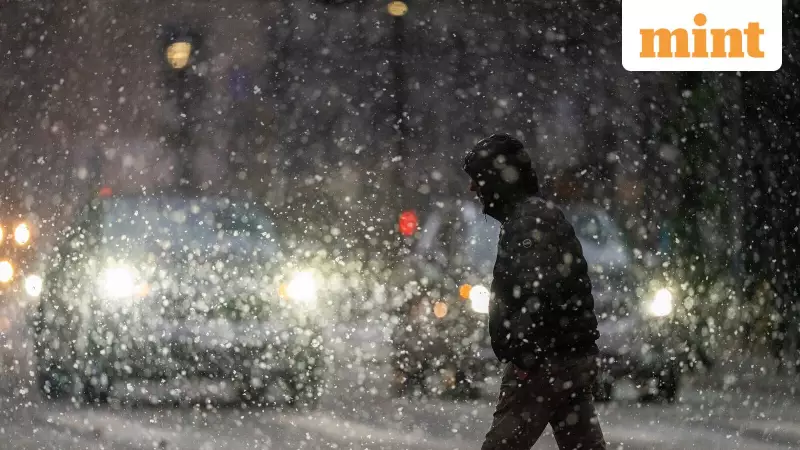
A sudden burst of winter weather has triggered alerts across parts of the northeastern United States, with authorities issuing warnings for dangerous snow squalls that could make travel treacherous. The advisories highlight the risks of abrupt whiteout conditions and icy roads.
Winter Weather Advisories in Effect
As per reports, a winter weather advisory for accumulating snow is active for parts of Massachusetts until 1 PM on Thursday, local time. The advisory specifically covers Berkshire County and western sections of Franklin and Hampshire Counties. All of western Massachusetts is expected to see minor snow accumulation, with drivers warned to watch for slick spots, particularly in hill towns.
Meteorologists indicated that snow squalls could lead to heavier accumulation early in the morning, especially before 7 AM. These intense, short-lived bursts of snow are known to create instant hazards on roadways.

Widespread Snow Squall Warnings
The weather disruption is not confined to Massachusetts. Earlier on Thursday, a snow squall warning was issued for Sullivan County in Pennsylvania. The warning encompassed communities including Dunmore, Hazleton, Bushkill, Nanticoke, Old Forge, Scranton, Kingston, and Pittston.
Furthermore, the DMV area—encompassing Washington DC, Maryland, and Virginia—experienced a snow squall around 4:30 AM on Thursday. Officials reported that the squall was moving rapidly at a speed of 35 mph, accompanied by strong winds.
Additionally, cities like Boston, Cambridge, Providence, and Worcester, along with much of New England, were under a snow squall warning until 8:30 AM, as confirmed by local NBC affiliates.
Understanding the Danger of a Snow Squall
A snow squall is a brief but intense period of moderate-to-heavy snowfall, typically lasting 30 to 40 minutes and affecting a localized area. Unlike prolonged storms, it can quickly coat roads with ice even when a major storm isn't forecasted. There are two primary types: lake-effect and frontal snow squalls.
These events are exceptionally dangerous for travel, sometimes more so than blizzards, due to the sudden change in conditions. The main hazards include:
- An abrupt loss of visibility caused by whiteout conditions.
- Instantaneously slippery roads leading to black ice.
- A high risk of multi-vehicle pile-ups.
Lake-effect snow squalls, in particular, can dump heavy amounts of snow, paralyzing roads and cities. A tragic example of their danger occurred on January 9, 2015, when a snow squall on the I-94 highway near Galesburg, Michigan, resulted in a massive pile-up involving 193 vehicles.
Authorities continue to urge extreme caution for motorists and air travelers in the affected regions, advising people to monitor updates and avoid unnecessary travel during warning periods.