Slovak Prime Minister Publicly Breaks Ranks With EU Over Ukraine Policy
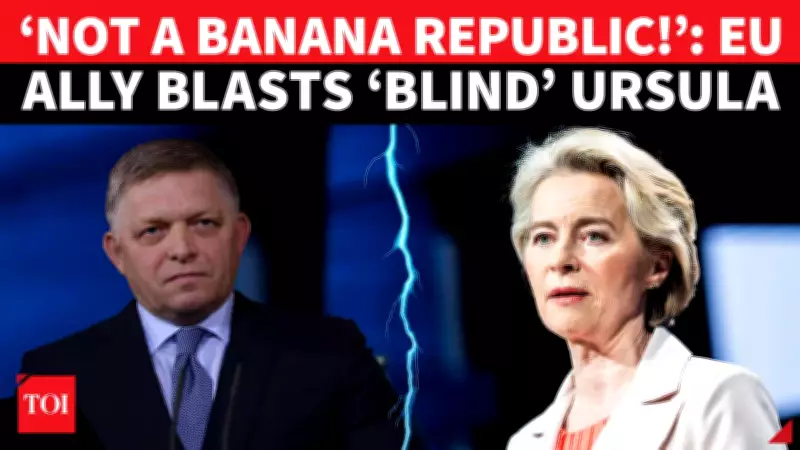
In a striking public rebuke, Slovak Prime Minister Robert Fico has openly criticized the European Union's military support for Ukraine, warning that the ongoing conflict "has no military solution." Speaking from Bratislava, Fico expressed alarm at recent remarks from German Chancellor Friedrich Merz, who suggested Europe must weaken Russia both militarily and economically.
Fico Condemns EU's Proposed Military Loan as 'Ideological Madness'
The Slovak leader specifically targeted the EU's proposed €90 billion military loan for Ukraine, labeling the initiative as "ideological madness." Fico argued that Brussels should prioritize diplomatic negotiations and a peaceful settlement rather than continuing to prolong the war through military assistance. "We cannot blindly follow Brussels on this path," Fico declared, emphasizing Slovakia's independent stance on foreign policy matters.
Fico also made serious allegations against Ukrainian President Volodymyr Zelensky, claiming that Ukraine's decision to halt gas transit has cost Slovakia approximately €500 million annually. This economic impact has further strained relations between the two nations and influenced Slovakia's position on continued support for Ukraine.

Reaffirming Slovakia's Sovereign Position
The Prime Minister firmly stated that Slovakia will not "blindly follow" the European Union's directives regarding Ukraine. He emphasized that Slovak voters will ultimately determine the nation's foreign policy direction through democratic processes, particularly looking ahead to the 2027 elections. This declaration underscores growing divisions within the European Union regarding the appropriate level of support for Ukraine amidst the prolonged conflict.
Fico's comments represent a significant departure from the unified front that the European Union has attempted to maintain regarding Ukraine. While many EU nations have consistently supported military and economic aid to Ukraine, Slovakia's public criticism signals potential cracks in this consensus. The Prime Minister's insistence on pursuing negotiated peace rather than military escalation reflects a different strategic approach to resolving the Ukraine-Russia conflict.
This development comes at a critical juncture in European politics, as member states grapple with balancing support for Ukraine against domestic economic pressures and political considerations. Fico's outspoken criticism may encourage other EU nations to reconsider their positions or at least engage in more open debate about the long-term strategy for ending the conflict in Ukraine.