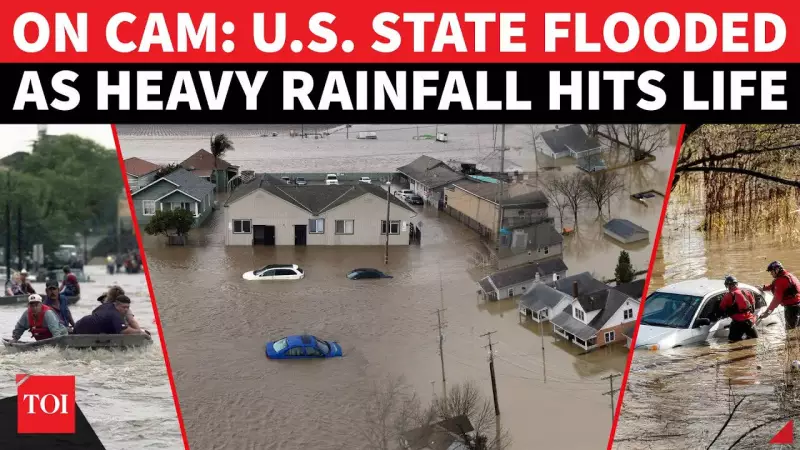
A state of emergency has gripped the San Francisco Bay Area in the United States as relentless rainfall and powerful storms have unleashed severe flooding, turning streets into rivers and forcing residents to use boats for navigation.
Neighborhoods Submerged, Kayaks Become Transport
The crisis escalated on Christmas Day when a powerful storm battered California, which was already soaked from days of rain and recovering from mudslides in mountain towns. The storm triggered evacuation warnings and high surf advisories across the state.
Recent helicopter footage from local broadcaster KGO revealed the shocking extent of flooding in a neighborhood within Marin County, California. The visuals showed submerged roadways and parking areas, with some residents resorting to a kayak to move through the waterlogged streets. The flooding has severely disrupted normal life in the Bay Area.

King Tides and Relentless Rains Wreak Havoc
According to reports, the flooding has been exacerbated by seasonal King Tides, which have significantly impacted Marin County. These extreme high tides are known to flood critical infrastructure, including:
- Roadways and highways
- Public parking areas
- Shoreline infrastructures
The combination of saturated ground from previous rainfall, the Christmas Day storm, and the King Tides has created a perfect recipe for widespread mayhem. Authorities are now bracing for more rainfall expected this weekend, which could worsen the already critical situation.
State on Edge Amid Ongoing Weather Threats
The situation remains tense as California, no stranger to climate extremes, confronts this multi-pronged weather assault. The state is simultaneously managing the aftermath of mountain mudslides while preparing for new rainfall. The focus is currently on rescue, relief, and preventing further damage to property and infrastructure.
With evacuation warnings recently in effect and communities adapting to aquatic commutes, the San Francisco Bay Area flood event underscores the increasing volatility of weather patterns and the urgent need for resilient infrastructure in coastal regions.