

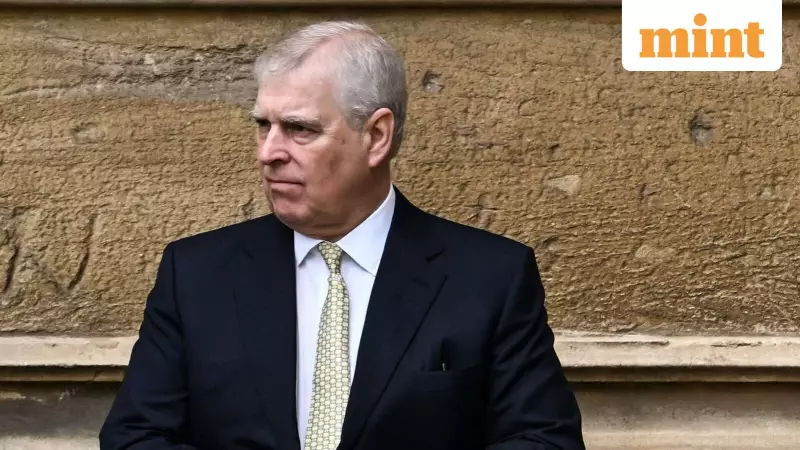
Britain's disgraced former prince Andrew Mountbatten Windsor, the brother of King Charles III, has remained silent on a formal request from United States lawmakers seeking his testimony about his controversial friendship with convicted sex offender Jeffrey Epstein.
The Congressional Deadline Passes Unanswered
Sixteen Democratic Party members of Congress had sent a signed letter to Andrew requesting his participation in what they termed a 'transcribed interview' with the House of Representatives oversight committee investigating Epstein. The lawmakers had set a clear deadline of November 20 for the royal to respond, but that date came and went without any communication from Andrew's side.
The congressional letter explicitly stated: "Well-documented allegations against you, along with your long-standing friendship with Epstein, indicate that you may possess knowledge of his activities relevant to our investigation." This formal request represents the latest chapter in the ongoing scrutiny of Andrew's connections to the disgraced financier.

Lawmakers Vow to Continue Investigation
Robert Garcia and Suhas Subramanyan, two prominent members of the oversight committee, expressed their disappointment through an official statement reported by AFP. "Andrew Mountbatten-Windsor's silence in the face of the Oversight Democrats' demand for testimony speaks volumes," they noted pointedly.
The lawmakers made it clear that their investigation would proceed regardless of Andrew's cooperation. Garcia and Subramanyan emphasized that their committee's work to understand the full extent of Epstein's network would "move forward with or without" testimony from the 65-year-old former royal. In a strong commitment to justice, they declared: "We will hold anyone who was involved in these crimes accountable, no matter their wealth, status, or political party. We will get justice for the survivors."
A History of Royal Consequences and Denials
This latest development follows years of controversy surrounding Andrew's association with Epstein. The situation reached a critical point on October 30, when King Charles III took decisive action by stripping his brother of his royal titles and evicting him from his royal residence.
The royal fallout began significantly earlier, in 2019, when Andrew famously resigned from royal duties following his disastrous interview with BBC Newsnight. During that interview, he denied meeting Virginia Giuffre, Epstein's primary accuser. The controversy escalated further in 2022 when Giuffre, a US and Australian citizen, filed a lawsuit against Andrew.
Tragically, Giuffre's story took another dramatic turn with her April suicide at her Australian home. The posthumous publication of her explosive memoir, 'Nobody's Girl', unleashed widespread public outrage that ultimately forced the palace to take the significant action of removing Andrew's titles and privileges.
Throughout these developments, Andrew has consistently maintained his denial of all allegations against him. The recent silence in response to US lawmakers' request adds another layer to his ongoing legal and public relations challenges.
In a related development earlier this week, US President Donald Trump signed legislation compelling the Department of Justice to release files concerning the late Jeffrey Epstein. Trump indicated in a social media post that this measure would help expose the truth about certain Democrats and their associations with the disgraced financier.






