Pentagon's New Defense Strategy Adopts Conciliatory Stance Toward China
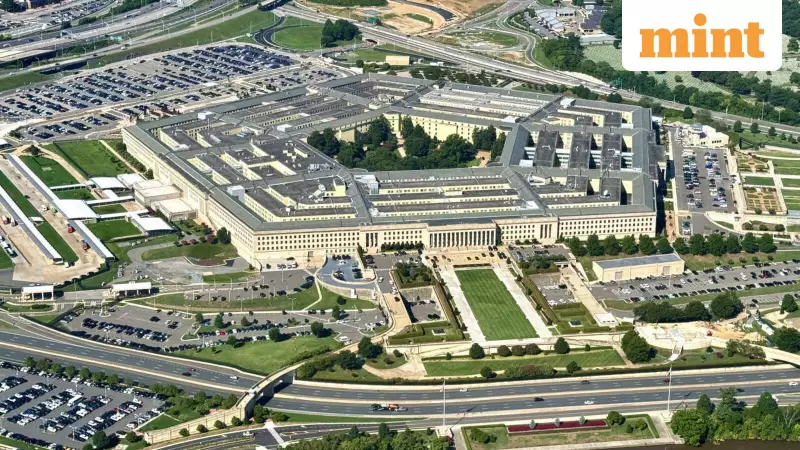
The Pentagon has unveiled a new national defense strategy that strikes a notably conciliatory tone toward Beijing, representing a significant shift from its previous approach. Released on Friday night, the document outlines the United States' overarching goal of establishing "strategic stability" in the Indo-Pacific region while actively working to de-escalate tensions with the Chinese military.
A Shift from Previous Strategy
This new strategy stands in stark contrast to the Pentagon's 2018 document, issued during President Trump's first term, which described China in far harsher terms. That earlier strategy labeled China as a "revisionist" power that, along with Russia, was seeking "veto authority over other nations' economic, diplomatic and security decisions."
The current document emphasizes the administration's interest in opening more military-to-military communications with Chinese forces and reducing regional tensions to establish a balance of power. According to the strategy, the ultimate objective is to create "a decent peace, on terms favorable to Americans but that China can also accept and live under."

Geopolitical Context and Priorities
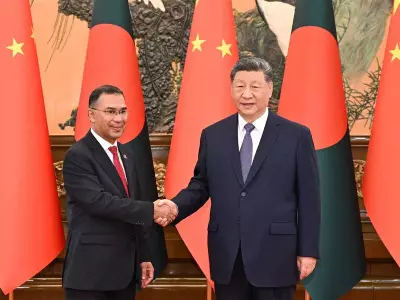
The release of this defense strategy comes at a crucial geopolitical moment, as President Trump prepares for an expected summit meeting in April with Chinese leader Xi Jinping. The White House has been actively seeking to lower tensions over Taiwan in advance of this meeting, hoping it might lead to increased economic cooperation between the two nations.
The Pentagon document underscores that U.S. pre-eminence in the Western Hemisphere remains a priority, while signaling the administration's longer-term goal of reducing American military involvement in Europe, the Korean peninsula, and the Middle East. As the strategy states: "As U.S. forces focus on Homeland defense and the Indo-Pacific, our allies and partners elsewhere will take primary responsibility for their own defense with critical but more limited support from American forces."
Taiwan Considerations and Regional Defense
While the Pentagon strategy doesn't mention Taiwan by name, it does address regional defense concerns that directly impact the democratically governed island that China claims as its territory. The document states that the U.S. military will "erect a strong denial defense along the First Island Chain"—a string of islands that includes Taiwan, Japan, and the Philippines.
Unlike President Joe Biden, President Trump hasn't explicitly stated whether he would use force to defend Taiwan. However, the Trump administration has approved an $11 billion arms package for Taiwan, and much of the Pentagon's spending and pursuit of cutting-edge technology has been promoted as a deterrent against potential Chinese actions toward the island.
Strategic Framework and Implementation
The national defense strategy is issued every four years and serves as a foundational document for decisions regarding force deployment and weapons development. Many of its themes were previewed in December when the White House released the national-security strategy, which sharply criticized European leaders while emphasizing Trump's focus on the Western Hemisphere and the Pacific region.
The release of this conciliatory defense strategy follows a general dialing-down of tensions between the U.S. and China, including President Trump's recent praise of Xi Jinping for helping negotiate a deal that allows TikTok to continue operating in the United States. This document represents a carefully calibrated approach that balances defense priorities with diplomatic considerations in one of the world's most strategically important regions.