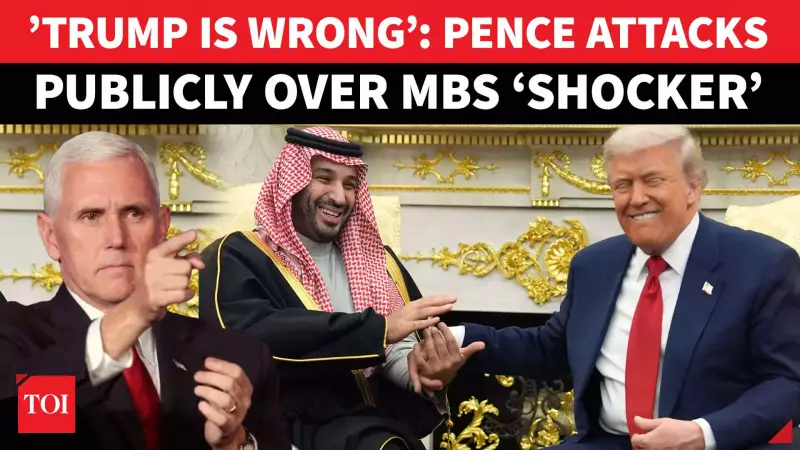
In a remarkable public rebuke, former Vice President Mike Pence has strongly criticized ex-President Donald Trump's controversial defense of Saudi Crown Prince Mohammed bin Salman concerning the brutal murder of journalist Jamal Khashoggi.
Trump's Shocking White House Comments
The political firestorm erupted after Trump, during a White House meeting on November 18, 2025, made startling claims about the 2018 killing of Washington Post columnist Jamal Khashoggi. The former president asserted that Crown Prince Mohammed bin Salman "knew nothing" about the gruesome murder that occurred at the Saudi consulate in Istanbul.
Even more controversially, Trump brushed off the international incident with the dismissive phrase "things happen" when discussing the assassination that sparked global outrage and condemnation.

Pence's Strong Rejection
Mike Pence, who served as Trump's vice president from 2017 to 2021, broke ranks with his former boss in emphatic fashion. The former Indiana governor firmly rejected Trump's position, insisting that Saudi Arabia must be held accountable for the journalist's killing.
Pence's comments represent one of his most direct public challenges to Trump's foreign policy approach, particularly regarding human rights considerations in international relations.
Broader Implications for US-Saudi Relations
This public disagreement between two former Republican administration leaders has ignited a fierce debate about the future of US-Saudi relations and the pursuit of justice for the slain journalist.
The exchange highlights deepening divisions within Republican circles about how America should approach its relationship with Saudi Arabia, particularly concerning human rights issues versus strategic and economic interests.
Khashoggi's murder in October 2018 continues to cast a long shadow over Saudi Arabia's international reputation and its relationship with Western democracies. The CIA concluded that Crown Prince Mohammed bin Salman likely ordered the assassination, though Saudi officials have repeatedly denied his involvement.
Pence's intervention marks a significant moment in the ongoing political discourse about accountability for the murder and America's moral standing in dealing with allied nations accused of human rights violations.