

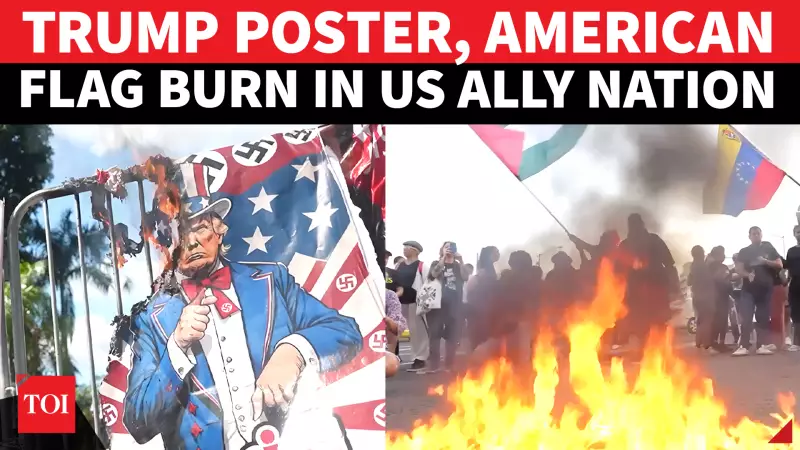
Panama City was the scene of a powerful and emotional demonstration recently, as the nation marked a sombre milestone. Citizens gathered to commemorate 36 years since the United States military invasion of Panama, an event that continues to shape the country's national consciousness.
March of Remembrance and Defiance
The streets of the capital saw activists marching with Panamanian and Venezuelan flags held high. In a stark act of protest, participants set fire to an American flag and an image of Uncle Sam that notably featured the face of former US President Donald Trump. This symbolic burning served as a visceral rejection of foreign military intervention and a forceful assertion of national self-determination.
Parallel to the public protests, official ceremonies were held to honour the fallen. Military personnel conducted solemn wreath-laying ceremonies in memory of the 516 Panamanians who lost their lives during the 1989 invasion. The casualties included both soldiers and civilians, a fact that underscores the widespread impact of the conflict.

Voices of Trauma and Resilience
For survivors and families of the victims, the anniversary is a painful reopening of old wounds. Individuals like Nizka Ibarguen shared their stories, recounting the lasting psychological and physical trauma that has persisted for decades. Their testimonies provided a human face to the historical statistics, reminding onlookers that the consequences of war extend far beyond the final battle.
Sociologists and community leaders used the occasion to reflect on broader themes of sovereignty, courage, and national dignity. They emphasized that the day was not just about looking back at loss, but also about recognizing the resilience of the Panamanian people and the ongoing importance of defending their country's autonomy against external pressures.
A Poignant National Reminder
The 36th anniversary ultimately stands as a poignant national reminder. It intertwines grief for those lost with a firm, collective resolve. The events in Panama City, from the flag-burning to the wreath-laying, collectively sent a clear message: the nation remembers its history, honours its victims, and continues to champion its right to self-determination free from foreign military intervention.
The demonstrations, blending solemnity with defiance, highlight how historical events continue to influence contemporary politics and national identity in Panama. The reference to current US political figures like Donald Trump also connects past grievances with present-day geopolitical sentiments.






