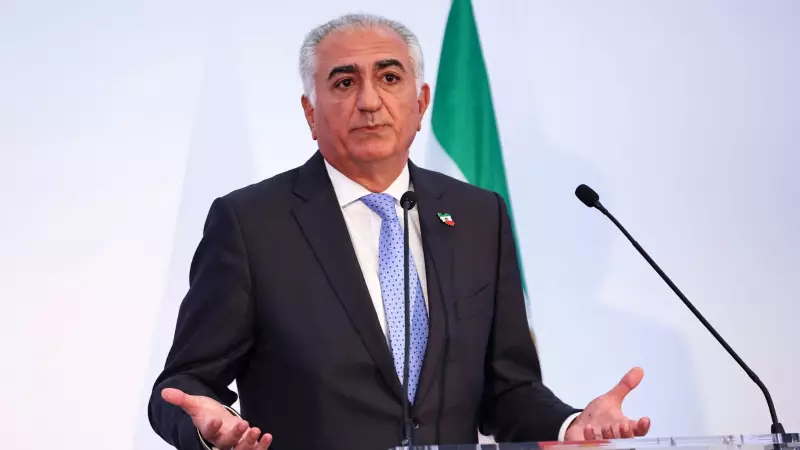
In a dramatic appeal from exile, Reza Pahlavi, the son of Iran's last monarch, has called upon former US President Donald Trump to take decisive action against the regime of Supreme Leader Ayatollah Ali Khamenei. This plea comes amidst a severe internet blackout in Iran and following Khamenei's public threat of a "brutal crackdown" on any further dissent.
An Exiled Prince's Urgent Plea to Washington
Reza Pahlavi, the London-based heir to the deposed Pahlavi dynasty, made his direct appeal to the influential American political figure on a significant date: January 8. This date marks the anniversary of the 2020 downing of a Ukrainian airliner by Iran's Revolutionary Guard, a tragic event that killed 176 people. Pahlavi's message was clear and urgent. He implored Trump and other Western leaders to recognize the Iranian regime's actions as a critical threat to global security and to provide tangible support to the Iranian people striving for freedom.
Pahlavi's strategy involves a multi-pronged approach aimed at isolating the Tehran regime. He has specifically urged Western powers to take several concrete steps:

- Designate Iran's Islamic Revolutionary Guard Corps (IRGC) as a terrorist organization officially.
- Activate the UN's Genocide Convention mechanisms against the regime's leaders.
- Enforce sanctions on the assets of regime officials and their families held abroad.
- Provide crucial technological support to help Iranian citizens bypass state-imposed internet censorship.
The Backdrop: Khamenei's Threat and a Nation Silenced
Pahlavi's international appeal is a direct response to escalating domestic repression. The catalyst was a recent speech by Supreme Leader Ali Khamenei at a prayer ceremony in Tehran. In his address, Khamenei issued a stark warning, threatening a "brutal crackdown" against any renewed protests or "sedition." This language has sent chilling waves through Iranian civil society, recalling the regime's harsh responses to previous waves of unrest, notably the Woman, Life, Freedom movement sparked by the death of Mahsa Amini in 2022.
Compounding the atmosphere of fear is a widespread internet blackout implemented by the state. Authorities have severely restricted access to global online platforms and social media, a common tactic to stifle organization and obscure human rights violations from the world's view. This digital curtain makes external monitoring nearly impossible and leaves the population in an information vacuum.
A Historical Shadow and the Path Forward
Reza Pahlavi's involvement adds a complex historical dimension to the current crisis. As the son of the late Shah Mohammad Reza Pahlavi, who was overthrown in the 1979 Islamic Revolution, he represents an alternative past and potential future for Iran in the eyes of some. While his direct political influence inside Iran is debated, his international platform allows him to keep the spotlight on the regime's abuses.
The situation presents a significant dilemma for the international community, including the United States. The appeal to Donald Trump is particularly noteworthy given his administration's earlier "maximum pressure" campaign against Iran, which involved sweeping sanctions. Pahlavi's call suggests a desire from opposition circles for even more forceful Western intervention, moving beyond diplomacy to active support for regime change.
The coming days and weeks will be critical. With Khamenei's regime signaling zero tolerance for dissent and actively cutting off Iran's digital lifelines, the risk of severe human rights abuses is high. The world watches to see if figures like Reza Pahlavi can galvanize sufficient external pressure, or if the Iranian people will be left to face the promised brutal crackdown in isolation and darkness.