Norway Sounds Alarm on Russian and Chinese Arctic Ambitions in Svalbard
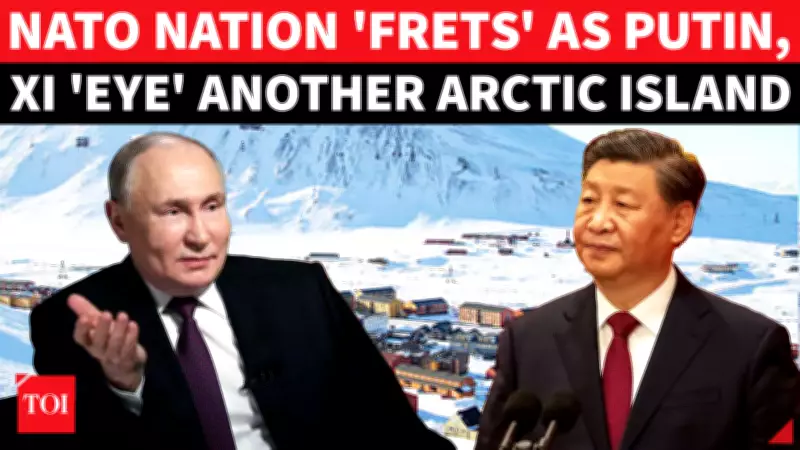
In a stark warning to NATO allies, Norway's military intelligence has issued a high-level threat assessment highlighting escalating efforts by Russia and China to expand their influence in the Arctic archipelago of Svalbard. The report, released by Oslo, underscores growing concerns over the strategic implications for regional security and Western unity.
Russian Moves to Fortify Presence in Barentsburg
According to Norwegian officials, Moscow views Svalbard's strategic location as critically important for its Arctic ambitions. Russia is actively working to strengthen its foothold in the Russian-populated settlement of Barentsburg, a key outpost on the archipelago. This includes efforts to reduce reliance on Norwegian infrastructure through increased and regular ship visits, which enhance logistical independence and military readiness in the region.
The intelligence assessment notes that these actions are part of a broader Russian strategy to assert dominance in the Arctic, leveraging Svalbard's proximity to vital shipping routes and natural resources. Norwegian analysts warn that such moves could destabilize the delicate balance of power in the High North, posing direct challenges to NATO's defensive posture.

China's Growing Polar Research and Shipping Activities
Simultaneously, China is ramping up its presence in the Arctic through expanded polar research initiatives and increased shipping activity. Beijing's efforts are aimed at securing a larger role in Arctic governance and resource exploitation, often under the guise of scientific cooperation. Norwegian intelligence points to China's dual-use capabilities, where civilian research vessels and infrastructure could potentially support military objectives in the future.
This dual approach by China aligns with its stated goal of becoming a "polar great power," raising alarms in Oslo about the long-term implications for sovereignty and environmental security in Svalbard. The archipelago, governed under the Svalbard Treaty, allows signatory nations economic access, but Norway retains sovereignty, making it a focal point for geopolitical competition.
Western Tensions and Opportunities for Moscow and Beijing
The Norwegian report also highlights how rising tensions between the United States and Europe, particularly over issues like Greenland, could inadvertently benefit Russia and China. As Western unity shows signs of strain, Moscow and Beijing may exploit divisions to advance their Arctic agendas with reduced opposition.
- Increased Russian military exercises and infrastructure upgrades in the Arctic region.
- Chinese investments in polar research stations and icebreaker fleets.
- Potential for coordinated Russia-China efforts to challenge NATO's Arctic strategies.
Norwegian officials emphasize that a fragmented Western response could undermine collective security efforts, allowing adversarial powers to gain strategic advantages in Svalbard and beyond. The situation echoes past concerns over Greenland, where geopolitical rivalries have similarly tested alliance cohesion.
Implications for NATO and Regional Stability
This threat assessment serves as a clarion call for NATO to bolster its Arctic defenses and diplomatic initiatives. Norway urges enhanced surveillance, joint military exercises, and stronger policy coordination among allies to counter the growing Russian and Chinese influence in Svalbard.
- Strengthen intelligence-sharing mechanisms within NATO on Arctic activities.
- Increase naval patrols and aerial reconnaissance in the Svalbard area.
- Develop economic and environmental safeguards to protect Norwegian sovereignty.
In conclusion, the escalating presence of Russia and China in Svalbard represents a significant security challenge for Norway and its NATO partners. As the Arctic becomes a hotspot for great power competition, proactive measures are essential to preserve stability and uphold international norms in this strategically vital region.