For decades, dolphins have been celebrated as the ocean's friendly, intelligent clowns, a stark contrast to the fearsome reputation of sharks. However, groundbreaking underwater footage has completely dismantled this cosy assumption, revealing them to be highly efficient and sometimes shocking predators.
The Navy's Eye-Opening Underwater Experiment
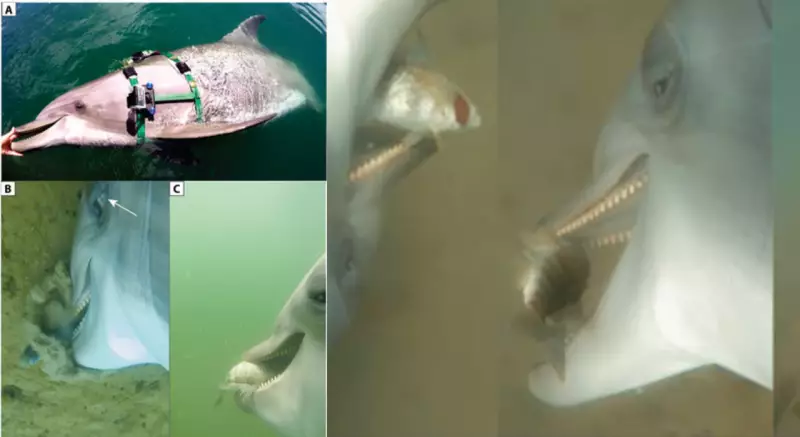
The revelatory evidence came from an unexpected source: the US Navy's Marine Mammal Program. Dolphins trained by the Navy to locate underwater mines were fitted with cameras. The goal was to observe their natural foraging behaviour in open water, without any confinement or staging. The late Dr. Sam Ridgway, renowned as the "father of marine mammal medicine" and the lead author of the pivotal 2022 study, reviewed this footage before his death three years ago.
The recordings captured hundreds of feeding events. The dolphins were seen consuming vast numbers of fish, but also something far more startling: venomous sea snakes. The audio data revealed a precise hunting sequence. While searching, the mammals emitted sonar clicks every 20 to 50 milliseconds. As they closed in on prey, these clicks condensed into a rapid "terminal buzz," followed by a distinct squeal that continued even as they caught and swallowed their meal.

The Suction Technique That Defied Old Theories
For years, scientists believed dolphins used a "ram feeding" method, simply charging at fish and snapping them up. The GoPro footage proved this theory wrong. Instead of biting, the dolphins displayed a remarkable technique: they flared their lips and expanded their throats, creating a powerful vacuum that sucked fish directly into their mouths.
"Fish continued escape swimming even as they entered the dolphins’ mouth," the researchers noted, "yet the dolphin appeared to suck the fish right down." The visuals were unsettling for many, showing dolphins "drilling" into the seabed or hoovering up prey with ruthless efficiency, their teeth fully exposed during the process.
Consuming Venom: The Most Shocking Discovery
Perhaps the most astonishing moment was when one dolphin was recorded consuming eight yellow-bellied sea snakes. The Australian Museum describes this species as "highly venomous" and potentially toxic to ingest. After catching each snake, the dolphin jerked its head and released a high-pitched squeal. Remarkably, it showed no signs of illness afterward.
When clips from the study circulated online, public reaction was stark. Social media users called dolphins "second biggest bastards of the mammal world" and warned they "aren’t to be trifled with." The footage doesn't show malice, but rather pure predatory adaptation, control, and efficiency.
The research makes one conclusion inescapable. Beneath the smooth skin and playful reputation lies a supremely tuned ocean predator, perfectly comfortable in its role, whether humans are watching or not. The friendly Flipper of popular imagination has been permanently complicated by the reality of a skilled and formidable hunter.