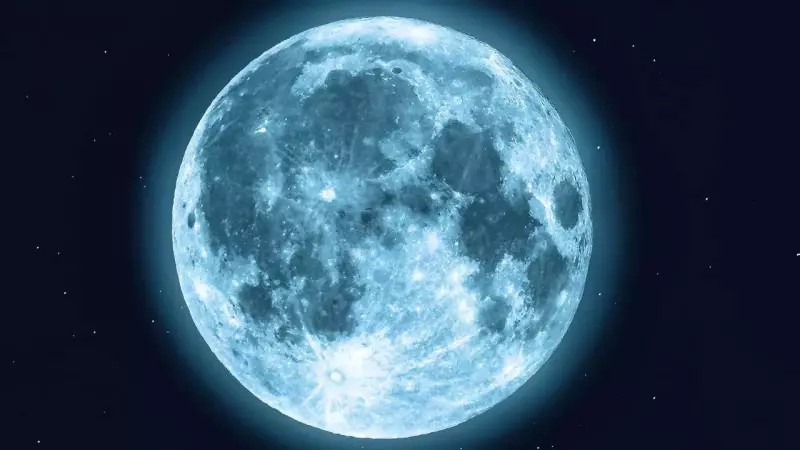
For centuries, the Moon has captivated humanity with its silent presence in our night sky, influencing everything from ocean tides to cultural traditions. Now, revolutionary scientific research has uncovered the dramatic truth about our lunar companion's birth – and it involves Earth's long-lost sibling planet.
The Cosmic Collision That Created Our Moon
A peer-reviewed study published in the prestigious journal Science has delivered the most compelling evidence yet supporting the Giant-impact hypothesis with a startling new twist. According to this groundbreaking research, approximately 4.5 billion years ago, a cataclysmic collision occurred between early Earth and a Mars-sized planet named Theia. But unlike previous assumptions that Theia was a distant wanderer, scientists now believe it was Earth's sister planet, formed in the same inner region of our Solar System.
The research team conducted meticulous analysis of lunar rock samples collected during various space missions, focusing specifically on high-precision iron isotope fingerprints. When compared with Earth's crust and various meteorites, the Moon's chemical composition showed remarkable alignment with inner-Solar-System bodies. This crucial finding suggests that Theia and Earth shared the same cosmic neighborhood during their formation.

Solving the Lunar Composition Mystery
For decades, the Giant-impact hypothesis faced a significant challenge: if Theia came from the outer Solar System, why did lunar rocks show such striking chemical similarities to Earth? The Apollo mission samples had revealed nearly identical oxygen and titanium isotopes between Earth and Moon, puzzling researchers for years.
The new research provides the missing piece to this puzzle. Since both planets formed side-by-side near the Sun, their chemical signatures would naturally be similar. This means the violent collision wasn't a random cosmic accident, but rather the dramatic conclusion to a shared beginning. The Moon we see today contains material from both Earth and the destroyed Theia, making it a cosmic memorial to a world that no longer exists.
How The Moon's Tragic Birth Shaped Earth's Destiny
The giant impact explains several longstanding mysteries about our lunar companion. The Moon contains far fewer volatile elements like water because the extreme heat of the collision vaporized these lighter components. Additionally, the Moon's relatively small iron core indicates that Theia's core likely merged with Earth's during the impact rather than contributing significantly to lunar formation.
This catastrophic event had profound consequences for life on Earth. The Moon stabilizes Earth's axial tilt, moderates climate patterns, and creates the tides that may have been crucial for the emergence of life. Without this collision, Earth might have developed completely differently, and life as we know it might never have emerged.
Scientists continue to investigate unanswered questions, including why only one Moon formed instead of multiple smaller moons, and how material was redistributed between the two planets after impact. Future lunar missions, particularly sample returns from unexplored regions, promise to provide even more evidence about this fundamental event in our planet's history.
Every new discovery brings us closer to understanding not just the Moon's violent birth, but the origins of the world beneath our feet. The next time you gaze at the Moon, remember that you're looking at the last surviving piece of Earth's sister planet – a world sacrificed to create the cosmic balance that made our existence possible.