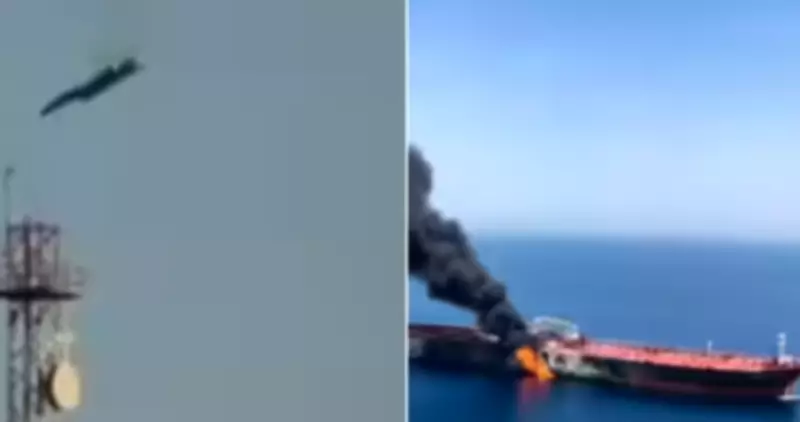
US Confirms Kuwait Accidentally Shot Down Three F-15E Fighter Jets
The United States military has officially confirmed that three American F-15E Strike Eagle fighter jets were accidentally shot down by Kuwaiti defense forces. This incident occurred amid a significant escalation of Iranian missile and drone attacks across the West Asia region. The combat mission was underway when the friendly fire incident took place, highlighting the chaotic and high-risk environment as tensions surge.
Expanding Regional Conflict and Additional Security Incidents
The war between Iran, Israel, and the United States has expanded sharply, with Iran and Tehran-backed militias launching missiles at Israel and several Arab states. Reports indicate that these attacks reportedly hit the US Embassy compound in Kuwait, further intensifying the crisis. In a separate development, two drones flying toward a British military base in Cyprus were successfully intercepted, according to a Cyprus government spokesperson.
Iranian state media has claimed responsibility for downing a US fighter jet in Kuwait, sharing video footage that shows a fighter jet engulfed in flames with pilots ejecting. Meanwhile, explosions have been reported in Bahrain, Dubai, and Doha, as Gulf nations vow to defend themselves. Israel has also conducted bombings on Hezbollah targets in Beirut, adding to the regional volatility.

Indian National Killed in Attack on Oil Tanker Off Oman Coast
In a tragic development, an Indian national was killed after the oil tanker MKD VYOM came under attack off the coast of Oman. The vessel was struck approximately 52 nautical miles from the Muscat Governorate, amid the escalating tensions in the Gulf region. According to Oman’s maritime security centre, the tanker, which flies the flag of the Marshall Islands and was carrying nearly 59,463 metric tons of cargo, was hit by an unmanned boat.
The attack triggered a powerful explosion in the engine section, sparking a severe fire onboard. This incident underscores the direct human cost of the regional conflict and raises serious concerns about maritime security in vital shipping lanes.
Prime Minister Modi Urges Dialogue and Diplomacy
Prime Minister Narendra Modi has expressed deep concern over the escalating tensions in West Asia, following large-scale military actions by the United States and Israel against Iran that resulted in the killing of Supreme Leader Ayatollah Ali Khamenei. Speaking during a joint statement with Canadian Prime Minister Mark Carney, Modi described the situation in the region as a matter of “grave concern” for India.
He emphasized that New Delhi would remain actively engaged with countries in West Asia to safeguard Indian nationals living and working there, reaffirming India’s unwavering commitment to ensuring the safety of its citizens amid the unfolding crisis. Modi’s call for dialogue and diplomacy highlights India’s strategic interest in regional stability.
India Braces for Economic Shock as West Asia Conflict Escalates
The US–Israel conflict with Iran poses immediate and severe economic risks for India, largely due to its heavy reliance on oil and gas imports from the Middle East. Any disruption in the Strait of Hormuz—a critical chokepoint for global oil shipments—could have devastating consequences:
- Push up crude oil prices significantly
- Widen India’s current account deficit
- Fuel inflation across the economy
Indian markets have already reacted negatively, with equities falling and the rupee weakening amid concerns over rising energy costs. A prolonged crisis could also:
- Disrupt global supply chains
- Increase freight and insurance costs substantially
- Affect remittances from the Gulf, which are a key source of income for many Indian families
Strategically, continued instability in the region complicates India’s diplomatic ties with Israel, Iran, and Gulf partners, requiring careful navigation to protect national interests.

Crude Oil May Hit $100 if Strait of Hormuz Shuts Down
Rising tensions in the Middle East have reignited fears of a major global oil shock, with markets closely monitoring the potential for crude prices to surge toward $100 per barrel. The US–Israel conflict with Iran has raised acute concerns about supply disruptions, particularly after American airstrikes heightened uncertainty around shipments passing through the strategically vital Strait of Hormuz.
Given oil’s central role in powering global economies, any sharp price increase could quickly translate into higher inflation worldwide. Although Iran accounts for about 3% of global crude output—producing over 3 million barrels per day and ranking as OPEC’s fourth-largest producer—its geographic position gives it outsized influence over regional energy flows.
The bigger risk for markets is not just Iranian production itself, but the possibility of prolonged disruption to Gulf exports, which could significantly tighten global supply and push prices sharply higher. This scenario underscores the fragile balance in global energy markets and the far-reaching impact of regional conflicts.