The Historic Launch That Made India Proud
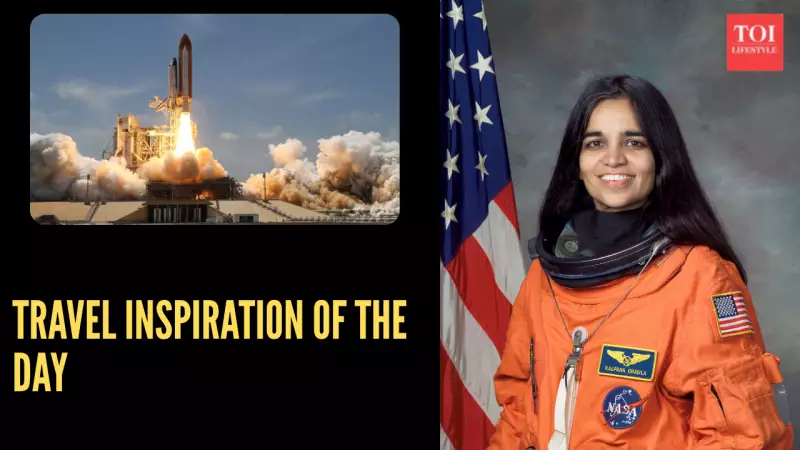
On November 19, 1997, a remarkable chapter in space history unfolded as Kalpana Chawla, an Indian-American astronaut and aerospace engineer, embarked on her first space mission. This wasn't merely a rocket launch—it represented the culmination of an extraordinary journey that began in India and ultimately reached beyond Earth's atmosphere.
The Space Shuttle Columbia's STS-87 mission marked a significant milestone as Chawla became the first woman of Indian origin to travel into space. Serving as mission specialist and backup flight engineer, she played a crucial role during the shuttle's critical takeoff operations.
From Indian Classrooms to NASA Mission Control
Chawla's path to NASA was paved with dedication and academic excellence. Her educational journey took her through Dayal Singh College and Punjab Engineering College before she pursued advanced degrees in the United States, eventually earning both MSc and PhD qualifications.

News of her groundbreaking achievement spread rapidly across India. The then Prime Minister Inder Kumar Gujral personally telephoned Chawla to extend congratulations, expressing national pride and emphasizing how her accomplishment would inspire generations of Indian women and children.
Mission Challenges and Professional Triumph
During the mission, Chawla faced significant challenges when tasked with deploying the Spartan research module. A sudden power surge disrupted the satellite's control systems, leading to complications during deployment. Using the shuttle's robotic arm, Chawla attempted to secure the satellite, but technical issues caused it to spin at two degrees per second.
Although some media outlets initially criticized Chawla for the deployment difficulties, fellow astronaut Kevin R. Kregel strongly defended his crewmate, emphasizing that the full context of the situation hadn't been properly understood.
NASA launched a comprehensive investigation on December 4, 1997. While preliminary findings suggested "crew error," the final report completely exonerated Chawla, identifying insufficient training, software interface problems, and communication gaps with ground control as the actual causes.
Scientific Contributions and Lasting Legacy
Despite the Spartan module incident, Chawla made substantial scientific contributions during the 15-day mission. She supervised and conducted experiments in the Middeck Glovebox as part of the United States Microgravity Payload mission (USMP-4). Her research focused on mixing liquids that naturally separate—work that could eventually lead to advanced metal combinations for future computer technology.
By mission completion, Chawla had traveled an impressive 10.4 million miles across 252 Earth orbits, logging more than 376 hours in space. Following her return, she assumed new responsibilities at NASA, advising shuttle engineers, contributing to payload development, and eventually leading the Crew Systems and Habitability department.
Final Mission and Eternal Memory
Chawla's second space mission, STS-107, launched on January 16, 2003, after numerous delays. Serving as flight engineer, she supported pilot William C. McCool during takeoff. The mission involved intensive scientific work, with the crew conducting over 80 experiments in areas including combustion, crystal growth, and plant biology in space.
Tragically, on February 1, 2003, during re-entry, the Space Shuttle Columbia disintegrated over Texas due to wing damage caused by insulating foam that had struck the orbiter during launch. All seven crew members, including Chawla, perished in the disaster.

Kalpana Chawla's legacy continues through numerous posthumous honors:
- Punjab Engineering College named its girls' hostel after her and established a prize for top aeronautical engineering students
- India renamed its MetSat-1 satellite as "Kalpana-1"
- An asteroid was christened 51826 Kalpanachawla
- The band Deep Purple composed the tribute song "Contact Lost" in her memory
Her most enduring legacy remains her inspirational message: "Don't be afraid to take risks and step out of your comfort zone"—words that continue to motivate aspiring scientists and explorers worldwide.