

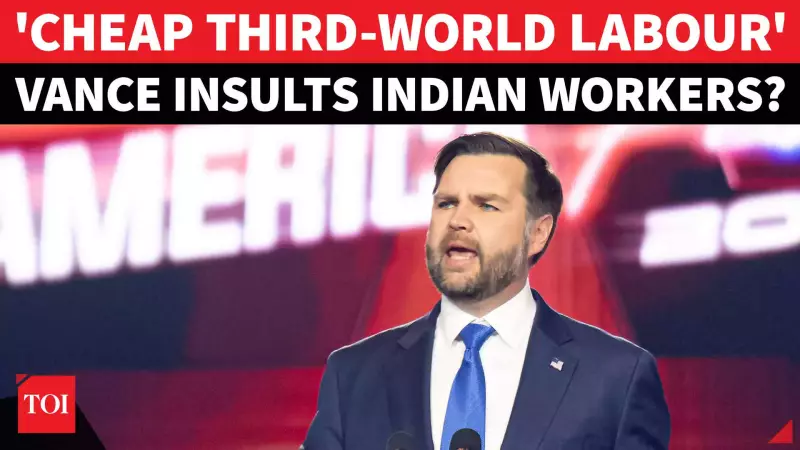
US Vice President JD Vance has ignited a fresh controversy with his strong defence of the Trump administration's aggressive stance on H-1B work visas, making remarks that have been interpreted as an insult towards skilled professionals from countries like India. On December 22, 2025, Vance accused American corporations of deliberately sidelining domestic workers to hire cheaper labour from developing nations.
Vance's Defence of 'America First' Visa Policy
In his comments, Vance squarely backed the administration's decision to crack down on the popular H-1B visa program, which is extensively used by Indian tech professionals. He argued that companies should not be allowed to bypass American labour simply to cut costs by recruiting from abroad. His characterization of this practice as relying on "cheap, third-world labour" has drawn sharp criticism from immigrant communities and business groups alike.
When questioned about the administration acting without waiting for Congressional approval, Vance offered a straightforward justification. He stated that protecting American jobs was an urgent priority that demanded immediate action, implying that procedural delays would have been detrimental to US workers. This position signals a much tougher future for work visa programs under the current US leadership.

Broader Implications for Immigration and Global Talent
The Vice President's statements are not made in isolation. They reflect a renewed and hardening "America First" approach to immigration, corporate hiring, and economic policy. The focus is squarely on reshoring jobs and prioritising US citizens in the workforce, amid ongoing debates about labour shortages and the ethics of global hiring practices.
For India, which is the largest recipient of H-1B visas, these remarks and the accompanying policy shift carry significant weight. Thousands of Indian engineers, IT specialists, and other skilled workers rely on this program for employment in the United States. Vance's rhetoric frames their participation not as a exchange of high-value skills, but primarily as a cost-saving measure for corporations, a viewpoint that many find reductive and offensive.
What This Means for the Future
The immediate consequence is a clear signal that the Trump-Vance administration intends to continue and potentially intensify restrictions on work visas. The policy goals are multi-fold:
- Reducing immigration through employment channels.
- Encouraging companies to hire and train within the United States.
- Reshoring manufacturing and service jobs back to American soil.
This stance is likely to create tension with major tech companies in Silicon Valley and beyond, which have long argued that the H-1B program is essential for sourcing specialised talent that is scarce domestically. The coming months will reveal how this clash between populist political rhetoric and corporate global hiring needs plays out, with the careers of countless Indian professionals hanging in the balance.






