Japan's Ruling LDP Poised for Historic Landslide Victory in Snap Election
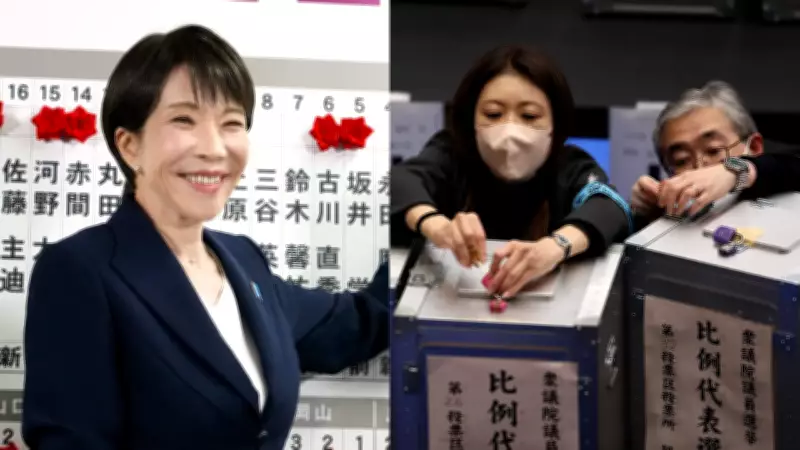
Projections from Japan's snap election indicate Prime Minister Sanae Takaichi's ruling Liberal Democratic Party (LDP) is heading toward a monumental landslide victory. The conservative leader is expected to deliver an unprecedented 316 seats in the 465-seat lower house, marking the party's best-ever electoral performance. This decisive outcome grants Takaichi substantial political capital to advance her ambitious conservative agenda.
Coalition Secures Commanding Parliamentary Control
Together with coalition partner Japan Innovation Party (Ishin), the ruling bloc is projected to control 352 seats, establishing a commanding majority in parliament. NHK figures show Ishin securing 36 seats, while opposition parties collectively won 113 seats. This overwhelming mandate provides Takaichi with wide-ranging authority to implement significant policy shifts she has championed throughout her campaign.
Constitutional Revision and Legislative Power
The projected two-thirds majority places Takaichi in a formidable position to pursue her long-held objective of revising Japan's pacifist constitution. The coalition's expected 352 seats far exceed the 261-seat threshold required for an "absolute stable majority," enabling control of parliamentary committees and smoother passage of legislation, including crucial budget proposals.

Furthermore, a supermajority of 310 seats would allow the coalition to override the upper house, where it currently lacks a majority. This legislative strength significantly enhances Takaichi's ability to implement her vision for Japan's future direction.
High-Stakes Political Gamble Pays Off
Takaichi, 64, called the snap election just three months into her tenure, aiming to capitalize on her strong personal approval ratings after assuming leadership of the long-dominant LDP late last year. The election represented a high-stakes political gamble to secure a fresh mandate and stabilize the party before potential popularity declines.
In a television interview as results emerged, Takaichi emphasized, "This election involved major policy shifts—particularly a major shift in economic and fiscal policy, as well as strengthening security policy. These are policies that have drawn a great deal of opposition... If we have received the public's support, then we truly must tackle these issues with all our strength."
LDP's Remarkable Revival Under Takaichi
The projected victory marks a dramatic turnaround for the LDP, which had faced significant challenges under Takaichi's two predecessors. The party lost its parliamentary majority amid corruption scandals and rising living costs, with its decades-old coalition with Komeito collapsing in 2024.
Despite facing a more unified opposition in this election, Takaichi's personal popularity appears to have revived the party's fortunes. Government approval ratings have consistently hovered above 70%, demonstrating her substantial appeal among Japanese voters.
Far-Right Presence and Political Shifts
The far-right Sanseito party fielded a record 190 candidates and was expected to increase its parliamentary presence to approximately 15 seats, up from just two previously. While remaining a small party, Sanseito's emergence has contributed to shifting Japan's political discourse to the right, mirroring trends observed in other advanced democracies.
Takaichi's Conservative Vision and International Relations
Japan's first elected female prime minister, Sanae Takaichi is an ultraconservative leader known for her hardline views and distinctive personal style. A self-described admirer of Margaret Thatcher, she has pledged to "work, work, work" after taking office in October.
Her staunch conservative positions include opposition to same-sex marriage, legislation allowing married couples to use separate surnames, and women succeeding to the imperial throne. Strongly pro-defense, she maintains a close alliance with the United States while advocating for strengthened Japanese military capabilities.

Relations with China have become increasingly strained under Takaichi's leadership, particularly after she suggested Japan could intervene militarily if China attempted to seize Taiwan by force. This China-hawk stance has reinforced concerns among voters already uneasy about her push for significantly higher defense spending.
Economic Promises and Voter Concerns
A key election pledge involved suspending the 8% sales tax on food to help households cope with rising prices. However, this promise has raised concerns among investors about funding mechanisms, given Japan's substantial government debt burden.
Tokyo voter Ritsuko Ninomiya expressed widespread concern, stating, "People want their lives to be better and more comfortable because we are so accustomed to not having inflation... so people are very worried. I think we need a long-term solution rather than short-term fixes."
International Reactions and Election Conditions
Prime Minister Narendra Modi congratulated Takaichi on her "landmark victory," expressing optimism that Japan-India friendship could reach "greater heights." US President Donald Trump also extended congratulations, calling Takaichi a "highly respected and very popular" leader and expressing support for her "Conservative, Peace Through Strength Agenda."
Voters across Japan braved snow and severe weather conditions to participate in the country's first mid-winter election in 36 years. Transportation disruptions included 37 closed train lines, 58 suspended ferry routes, and 54 cancelled flights, with rare snowfall in Tokyo as citizens headed to polling stations.