

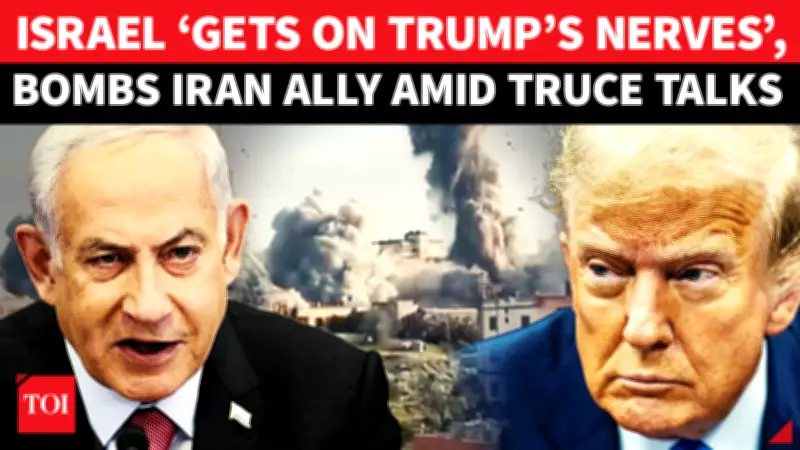
Netanyahu Intensifies Military Strikes on Hezbollah Amid Critical U.S.-Iran Diplomacy
Israeli Prime Minister Benjamin Netanyahu has significantly escalated military operations against Hezbollah targets in Lebanon, launching a series of deadly strikes that have heightened tensions across the Middle East. This aggressive military posture comes at a particularly delicate diplomatic moment, as high-stakes talks between the United States and Iran are currently underway in Islamabad, Pakistan.
Timing Raises Diplomatic Concerns
The timing of these intensified Israeli strikes has raised serious concerns among international observers and diplomats. The military escalation coincides precisely with critical negotiations between American and Iranian officials in Islamabad, creating what many analysts describe as a deliberate provocation that could undermine fragile diplomatic progress.
Reports from the region indicate that the continued Israeli bombardment represents a significant risk to ongoing ceasefire efforts that have been painstakingly negotiated over recent months. The strikes have created additional pressure on Washington, which finds itself navigating complex regional dynamics while attempting to maintain diplomatic channels with Tehran.

Regional Stability Hangs in Balance
As clashes persist along the volatile Israel-Lebanon border, questions are mounting about whether current peace talks can survive this military escalation. The situation has created a dangerous paradox: while diplomats work toward de-escalation in Islamabad, military actions on the ground are pushing the region closer to broader conflict.
The Netanyahu government's decision to intensify strikes against Hezbollah, Iran's primary regional ally, appears calculated to test both Iranian resolve and American diplomatic priorities. This strategic timing suggests Israel may be attempting to influence the outcome of the Islamabad talks through military demonstration rather than diplomatic engagement.
International Response and Future Implications
International observers are closely monitoring how this military escalation will impact the delicate balance of Middle Eastern diplomacy. The situation presents a critical challenge for all parties involved:
- The United States must navigate its dual role as Israel's primary ally while pursuing diplomatic engagement with Iran
- Iran faces pressure to respond to attacks on its regional proxy while maintaining diplomatic negotiations
- Israel appears to be testing the limits of military action during sensitive diplomatic windows
- Regional stability hangs in the balance as ceasefire efforts become increasingly fragile
The coming days will prove crucial in determining whether diplomatic channels can withstand this military pressure, or whether the region will descend into further escalation. The Islamabad talks represent a pivotal moment in Middle Eastern diplomacy, now complicated by Israel's intensified military actions against Iranian-aligned forces in Lebanon.






