Iran's Foreign Minister Accuses US of Echoing Vietnam-Era 'Five O'Clock Follies' in War Narrative
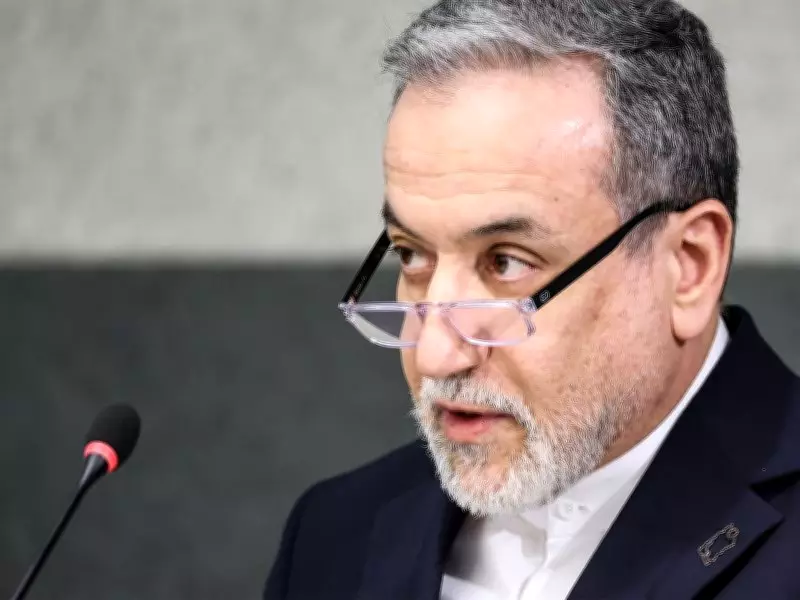
In a sharp critique of American military communications, Iran's Foreign Minister Seyed Abbas Araghchi has drawn a striking parallel between the United States' current war updates and the discredited briefings from the Vietnam War era, famously known as the "Five O'Clock Follies." Speaking from Tehran, Araghchi asserted that Washington's official narrative presents an overly optimistic view that starkly contrasts with the actual realities on the ground in the ongoing regional conflict.
Historical Comparison to Vietnam War Briefings
Araghchi specifically referenced the daily US military press briefings during the 1960s Vietnam War, which were criticized for claiming American victories even as casualties mounted, with over 50,000 US soldiers losing their lives. He suggested that the current US messaging follows a similar pattern of systematic misrepresentation, aimed at projecting military success despite operational challenges.
This accusation comes at a time when the United States maintains that its recent operations have significantly degraded Iranian military capabilities. However, Araghchi challenged these assertions, pointing to tactical developments that he claims tell a different story. He highlighted incidents such as reports of an F-35 aircraft being hit and the strategic movements of the USS Gerald Ford and USS Abraham Lincoln, arguing that these events indicate the conflict is far from the one-sided victory portrayed by Western officials.

Discrepancy Between Statements and Ground Realities
The Foreign Minister emphasized a growing gap between official US statements and the operational realities in the region. He stated that the American portrayal of the war is increasingly detached from the difficulties faced on the battlefield, echoing the skepticism that surrounded the Vietnam-era briefings.
Meanwhile, as the conflict in West Asia entered its third week, General Dan Caine, Chairman of the Joint Chiefs of Staff, provided an update at the Pentagon. He reported that the United States had destroyed 44 mine-laying Iranian vessels, effectively deterring Iran's capabilities to mine the strategic Straits of Hormuz. General Caine detailed ongoing efforts, stating, "We continue to hunt and kill mine storage facilities and naval ammunition depots. We continue to hunt and kill afloat assets, including more than 120 vessels and 44 mine layers, and the pressure will continue."
Intensification of US Military Operations
General Caine further outlined the specific assets deployed in the theatre, noting the use of A-10 Warthog aircraft alongside AH-64 Apache helicopters to target Iranian vessels in the Straits of Hormuz. The A-10 Warthog, in service since the 1970s, is renowned for its close air support capabilities, featuring a 30mm chain gun capable of firing up to 4,200 rounds per minute. This intensification of the air campaign coincides with the US Navy managing its maritime assets, as reports indicate that two of the three warships with counter-mine capabilities usually stationed in Bahrain were undergoing scheduled maintenance in a different theatre.
Military experts cited in reports suggest that Marines deploying to the region could participate in ground raids targeting assets such as missile and drone depots along Iran's coasts, which pose threats to US and commercial vessels.
US Defence Secretary's Stance on the Conflict
Amid these developments, US Defence Secretary Pete Hegseth stated on Thursday that the United States remains "on plan" in its war against Iran. However, he declined to provide a definitive timeline for the conflict's conclusion, emphasizing that the final decision would rest with President Donald Trump.
The exchange highlights the escalating tensions and divergent narratives between Iran and the United States, with Araghchi's comparison to the Vietnam War underscoring deep-seated criticisms of American military transparency and strategy in the Gulf region.